

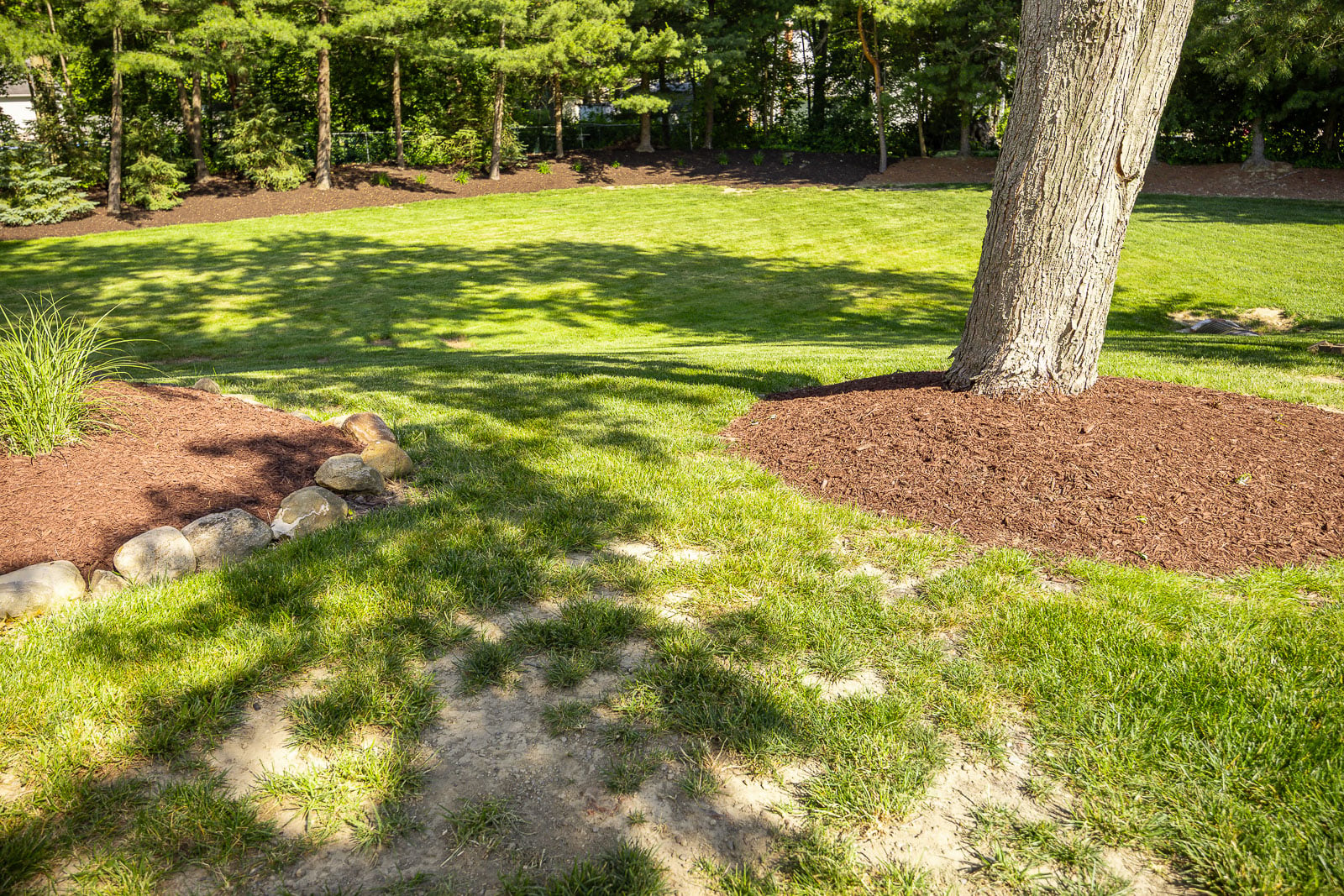
Post-Construction Lawn Care: How to Restore Your Yard After a Home Renovation/New Construction
If your lawn is struggling after a recent home renovation or new construction, it may be more than just a cosmetic problem.
A healthy yard requires a solid foundation, and construction can disrupt both your grass and the soil underneath it.
However, there are ways you can fix your yard after construction and work toward building a healthier lawn altogether. In this guide, we discuss:
- Why Does Construction Cause So Much Damage to a Lawn?
- How to Start by Assessing the Damage Before Trying to Repair Your Lawn
- How to Fix A Yard After Construction
- Why Core Aeration May Be Important After Construction
- Whether You Should Overseed or Start Over After Construction
- When Is the Best Time to Repair Construction-Damaged Grass in Northeast Ohio?
- Don't Forget About Weeds While Your Lawn Is Recovering
- How Long Does It Take a Lawn to Recover After Construction?
- When Should You Call a Lawn Care Professional After a Renovation?
- FAQs About Post-Construction Lawn Care
- Give Your Newly Improved Home a Lawn You Can Be Proud Of
Why Does Construction Cause So Much Damage to a Lawn?
Whether you’ve embarked on a home addition, remodeling project, utility work, new home construction, or driveway or patio installation, there are several reasons why your lawn may be having a tough time post-construction, such as:
- Soil compaction from heavy equipment and repeated foot traffic
- Excavation and soil disturbance
- Construction materials, rocks, or debris
- Ruts and uneven areas
- Existing turf being removed or buried
- Changes to drainage or grading
- Bare soil becoming vulnerable to weeds
- Removal of good topsoil
In some cases after a construction project, you may notice that your grass regrows at first, but when summer brings heat and dry conditions, those areas can start struggling.
It’s tempting to simply throw grass seed over the damaged area, water it, and call it a day, but doing so will likely not solve the root cause of your damaged lawn.
Grass seed needs more than water. It also needs good contact with the soil, along with enough space for air, water, and nutrients to move through and for roots to grow. If you throw seed on top of hard, compacted soil, you may see some seeds sprout, but the young roots can struggle.
Remember that the overall goal isn't just to get grass seed to sprout. Rather, it’s to create a healthy lawn with strong roots that can handle Northeast Ohio weather for years to come.
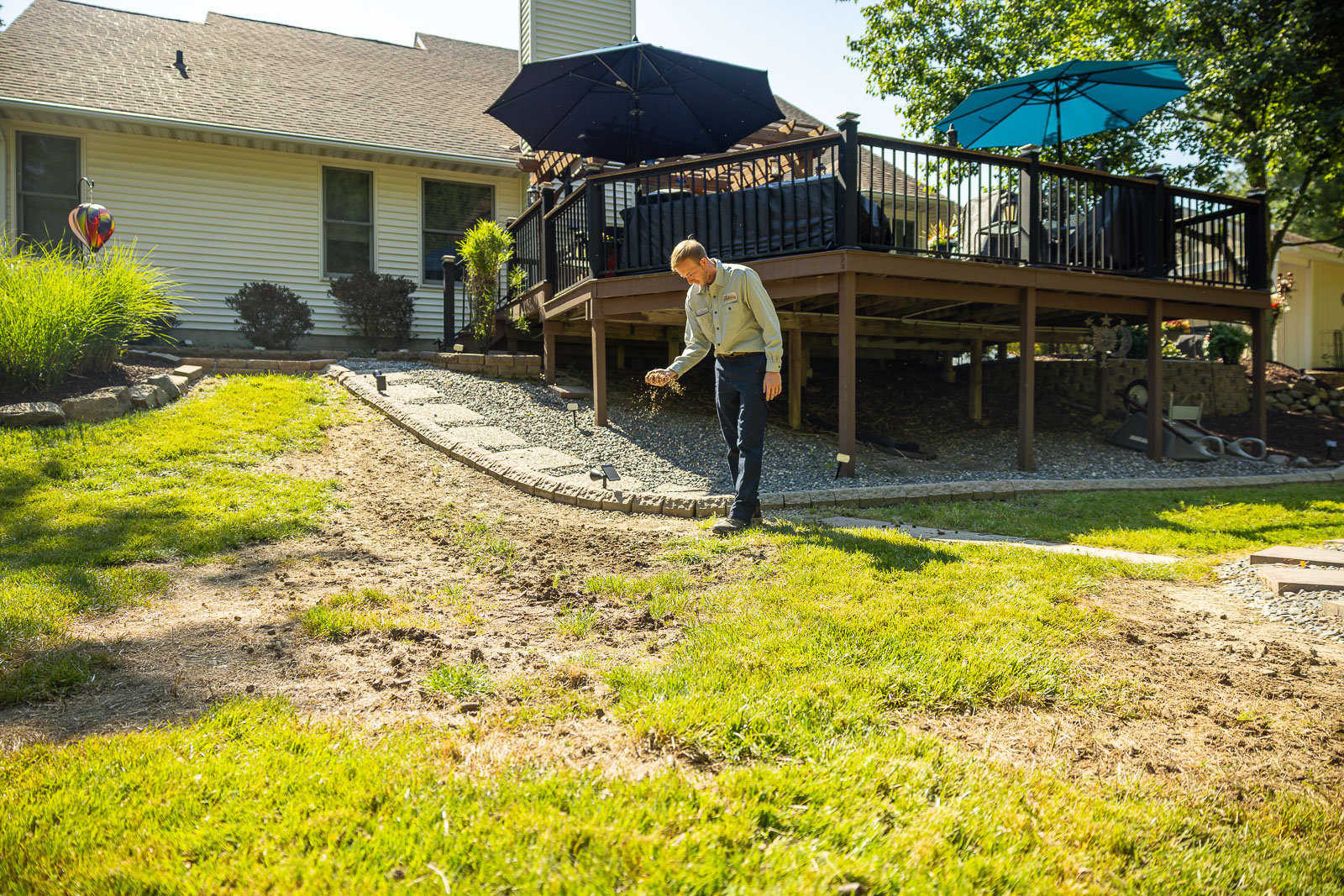
Start by Assessing the Damage Before Trying to Repair Your Lawn
After construction has concluded, take a good look at your lawn in order to figure out next steps.
Is the Grass Damaged or Completely Gone?
If your grass is damaged but the soil underneath is loose and healthy, you may only need to repair the turf. However, if the ground is extremely hard, water puddles or runs off, or grass repeatedly struggles in the same area, you may be dealing with a deeper problem.
/crew%20inspecting%20lawn%20up%20close%20for%20weeds.jpg?width=1600&height=902&name=crew%20inspecting%20lawn%20up%20close%20for%20weeds.jpg)
Has the Soil Become Compacted?
Construction around your property often means heavy machinery and workers tromping through your yard, leaving the soil underneath compacted.
Healthy soil has small spaces that allow air, water, nutrients, and grass roots to move through, but if everything gets packed tightly together, those air spaces disappear, making it difficult for grass to thrive.
Did Construction Change Your Yard's Grade or Drainage?
Pay attention to whether the composition of your yard has changed. Are there areas where water now collects, runs differently, or causes erosion where it didn’t before?

How to Fix a Yard After Construction
The good news is that it is possible to restore your yard after construction.
To determine the correct restoration plan, you need to take into account what has happened to your lawn and soil.
If your yard exhibits things like standing water, serious drainage issues, poor grading, buried rocks or construction debris, minimal topsoil, or severe compaction, address those issues before tackling lawn care.
Think of it like building a house. You wouldn't spend money improving everything above ground if the foundation underneath it wasn't right. The same goes for a lawn. You want to make sure the grass has a good environment to grow in before investing money in a lawn care program.
If you’re unsure about next steps, a trusted lawn care company like Turf Pride can help you assess the soil, drainage, amount of healthy grass remaining, and severity of the compaction to come up with the best course of action.

Why Core Aeration May Be Important After Construction
Because heavy equipment puts a lot of pressure on the ground, it can tightly pack your soil, especially if the ground is wet.
Core aeration can help by pulling small plugs of soil out of the lawn, creating openings for air, water, nutrients, and roots.
However, remember that aeration can't fix everything. If construction has removed the topsoil, changed the grade, buried gravel or debris, or severely damaged the soil, the area may need more work before aeration and overseeding will be successful.
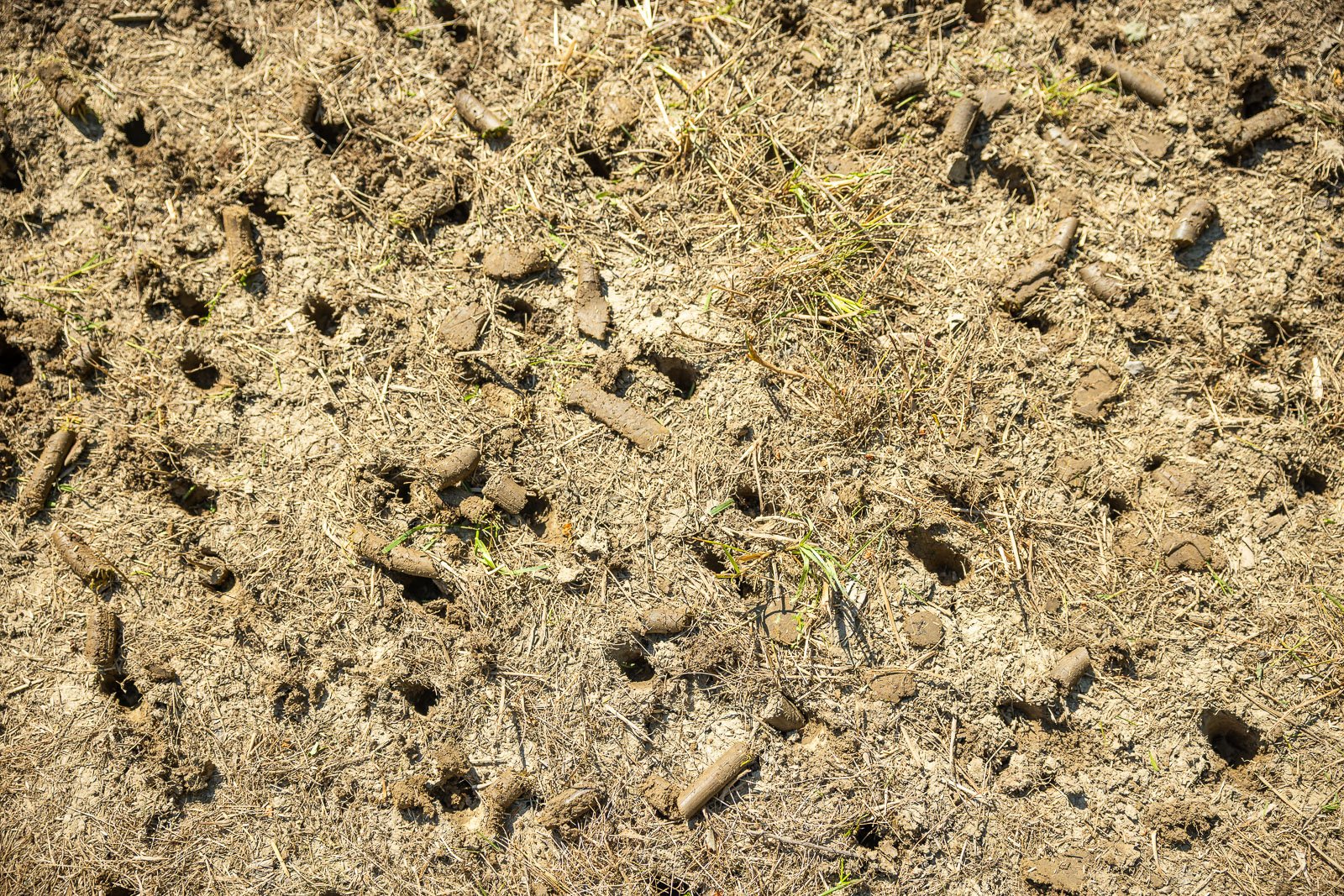
Should You Overseed or Start Over After Construction?
To seed or not to seed—that is one of the major questions you may face following construction.
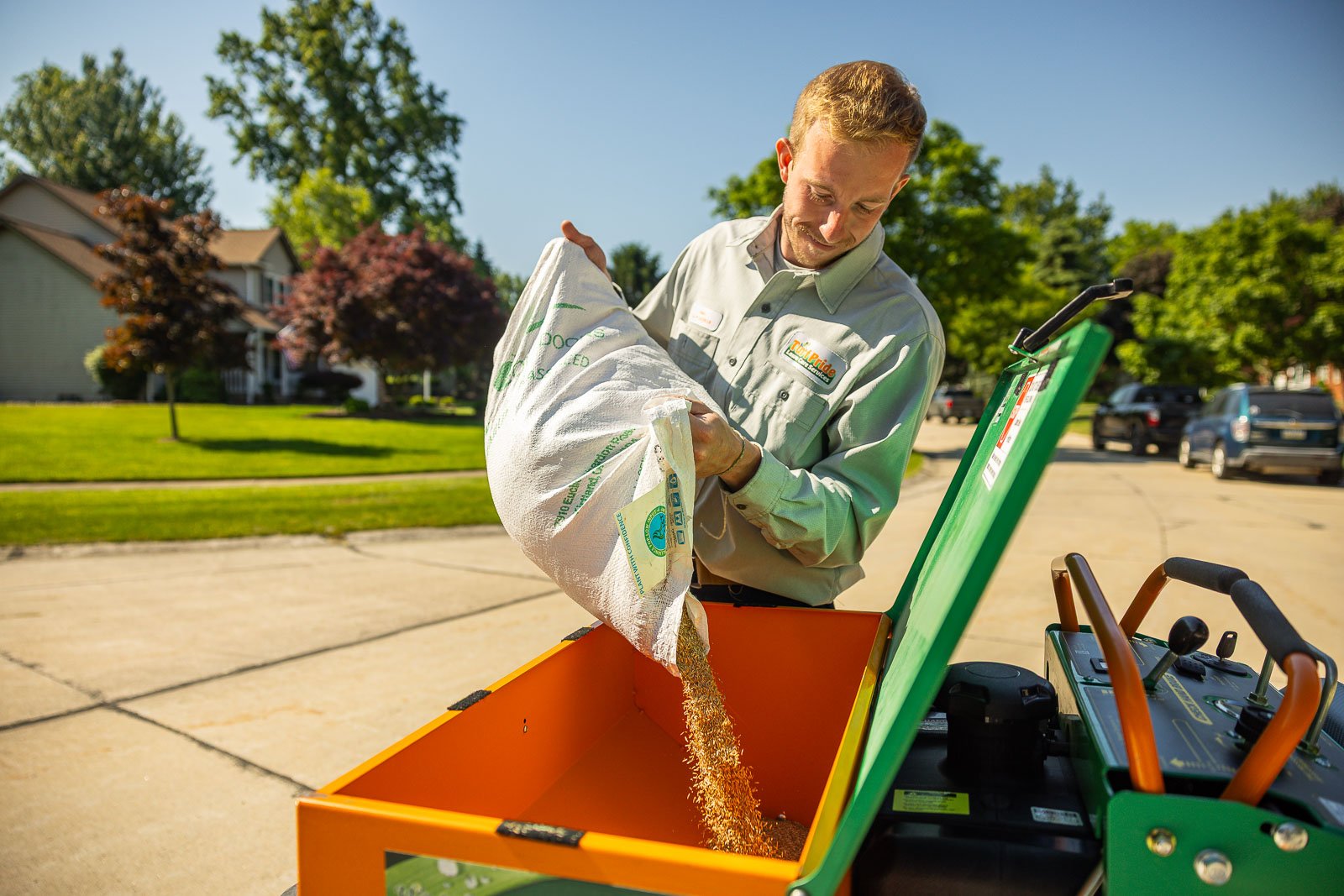
If your lawn is scattered with thinning areas or has a few bare spots, overseeding, in conjunction with aeration, may just be the ticket.
However, if you have large swaths within your lawn that have been stripped, buried, heavily compacted, or otherwise altered, a more extensive lawn renovation may be needed.
Remember that post-construction lawn restoration can be a process rather than an instant transformation, so you must be patient.
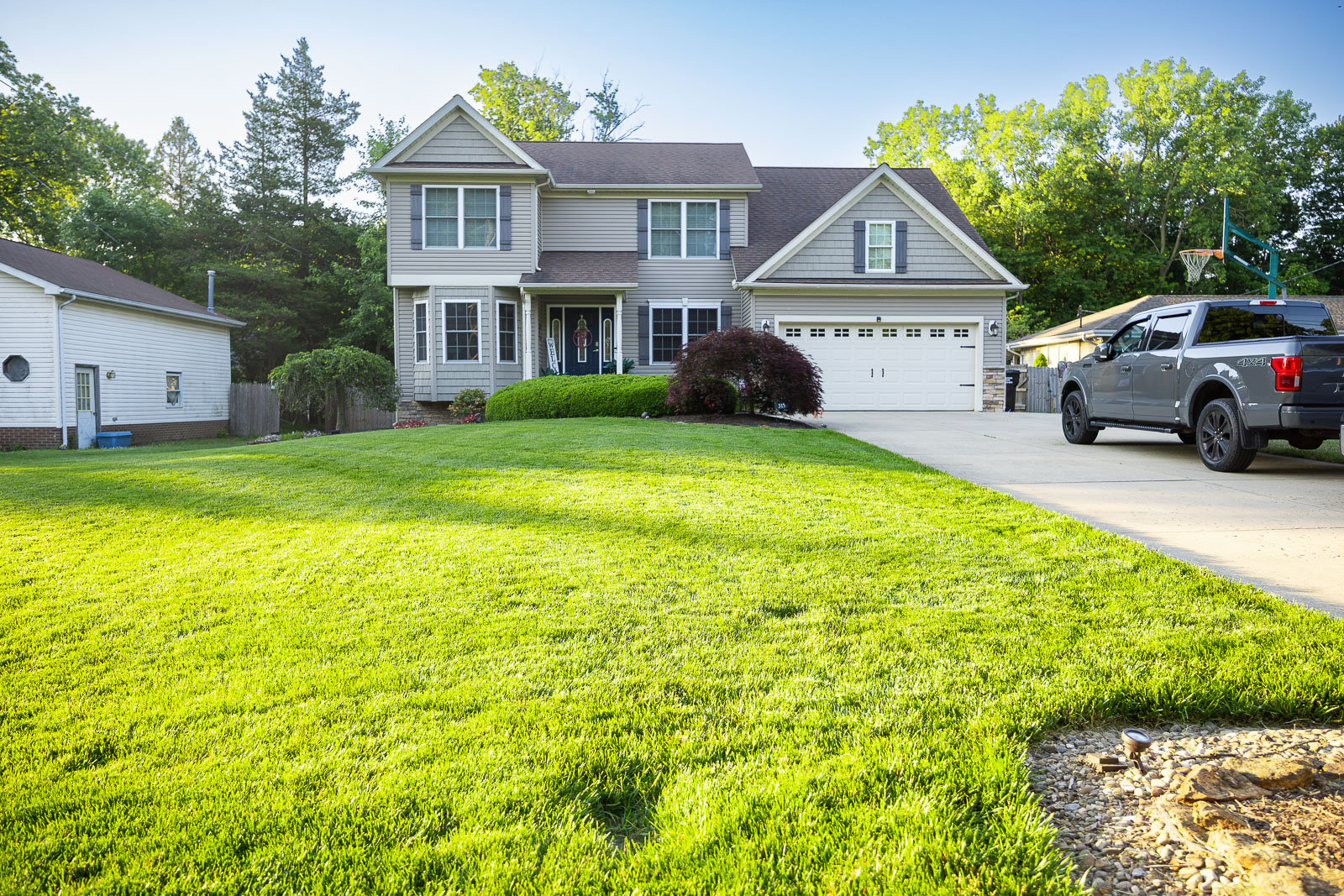
When Is the Best Time to Repair Construction-Damaged Grass in Northeast Ohio?
You don't always have control over when a construction project finishes, but you do have some control over when you try to reestablish your lawn.
In Northeast Ohio, late summer into early fall is usually one of the best times to seed. This is because the soil is still warm, temperatures are starting to cool, and young grass doesn’t have to contend with summer heat.
If construction ends during very hot weather or too late in the season, it’s a good idea to wait for a better time to restore your lawn.
In the meantime, you can correct drainage and grading problems, remove debris, prepare the soil, and make sure bare soil isn't washing away to help ensure your lawn is ready for restoration when the time comes.
Don't Forget About Weeds While Your Lawn Is Recovering
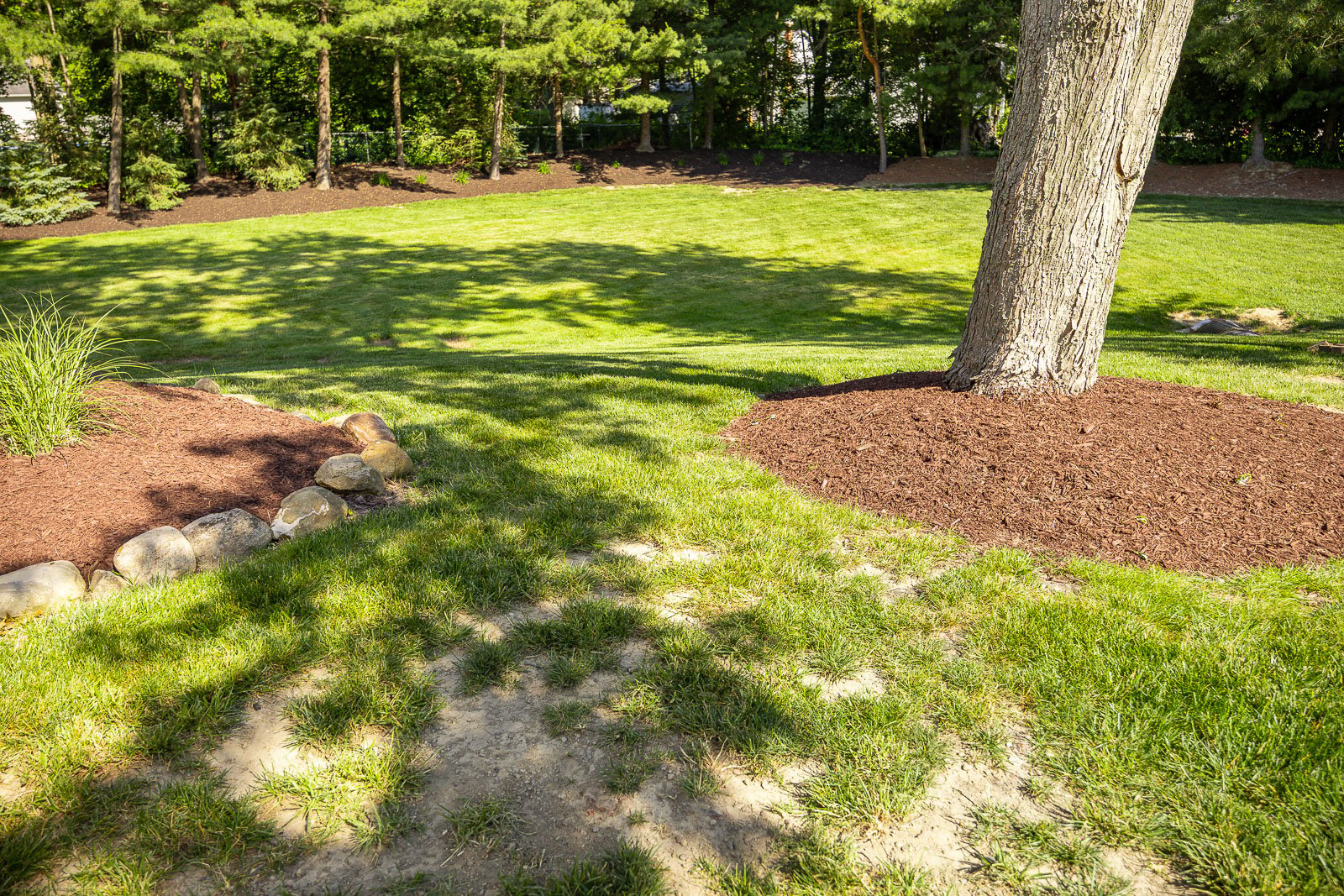
Disturbed and thin areas in your yard can create an oasis for weeds as they have less competition from turfgrass and thus more room to establish.
However, the primary goal after construction should be to get new grass established rather than trying to do everything—like get rid of weeds—at once.
In fact, some weed control products can prohibit grass seed from growing or damage very young grass.
You can deal with remaining weeds when the new grass is mature enough to safely treat.
A certified lawn care technician can provide you with the best guidance on coordinating the timing of treatments.
/Bare%20spots%20and%20weeds%20on%20lawn.jpg?width=1198&height=672&name=Bare%20spots%20and%20weeds%20on%20lawn.jpg)
How Long Does It Take a Lawn to Recover After Construction?
If you’ve ever heard the saying that something takes “as long as grass to grow,” you understand that regrowing a lawn takes time.
Seeing new grass come up is only the beginning. Those little grass plants need time to develop strong roots and grow thick enough to fill the area.
What’s more, weather, watering, soil quality, sunlight, drainage, grass type, and the amount of damage all affect how quickly a lawn recovers.
Some lawns can look dramatically better within a few months, while lawns with serious construction damage may take a full growing season or longer to get where the homeowner wants them.
When Should You Call a Lawn Care Professional After a Renovation?
There are a few things you may feel comfortable doing after a construction project on your property, like removing smaller debris, keeping vehicles or heavy foot traffic away from your lawn, and watering your lawn as needed.
If you’ve done what you can and given your lawn a few weeks to bounce back but it still hasn’t recovered—and you aren’t dealing with larger issues like drainage problems, poor grading, or minimal topsoil—you may want to call in a Northeast Ohio lawn care company like Turf Pride to give your lawn a facelift of its own.
Providing lawn care to Northeast Ohio homeowners since 2002, Turf Pride works with you to restore your lawn to its former glory through comprehensive lawn care programs that include aeration, overseeding, fertilization, and weed control.

FAQs About Post Construction Lawn Care
What’re some common mistakes homeowners make when trying to restore their lawn?
A common mistake is trying to do everything at once like seed, fertilize, and spray every weed. The timing of those treatments matters. The first priority should be to get new grass established. Then, you can worry about getting rid of the weeds.
Also, scattering grass seed over soil that’s become compacted will do little to help you reestablish your lawn.
Are there any cases where my yard needs more care than overseeding or aeration?
If we see standing water, serious drainage issues, improper grading, rocks, buried construction debris, very little topsoil, or extremely compacted soil, you likely need to address those problems first.
What can homeowners do after aeration and overseeding to help grass establish?
After overseeding, you should water your lawn with about a quarter-inch of water every day for about two weeks. This will keep the grass seeds damp and help them germinate.
Give Your Newly Improved Home a Lawn You Can Be Proud Of
Once the construction crews have left, it’s time to lay the groundwork for a lawn you can be proud of. Whether it’s aeration, overseeding, weed control, or fertilization, Turf Pride has the tools to rebuild your lawn from the ground up.
If you’re located in Lake, Geauga, or Cuyahoga County, get your quote today.