
Understanding Northeast Ohio Soil: What Homeowners Need to Know for a Healthier Lawn
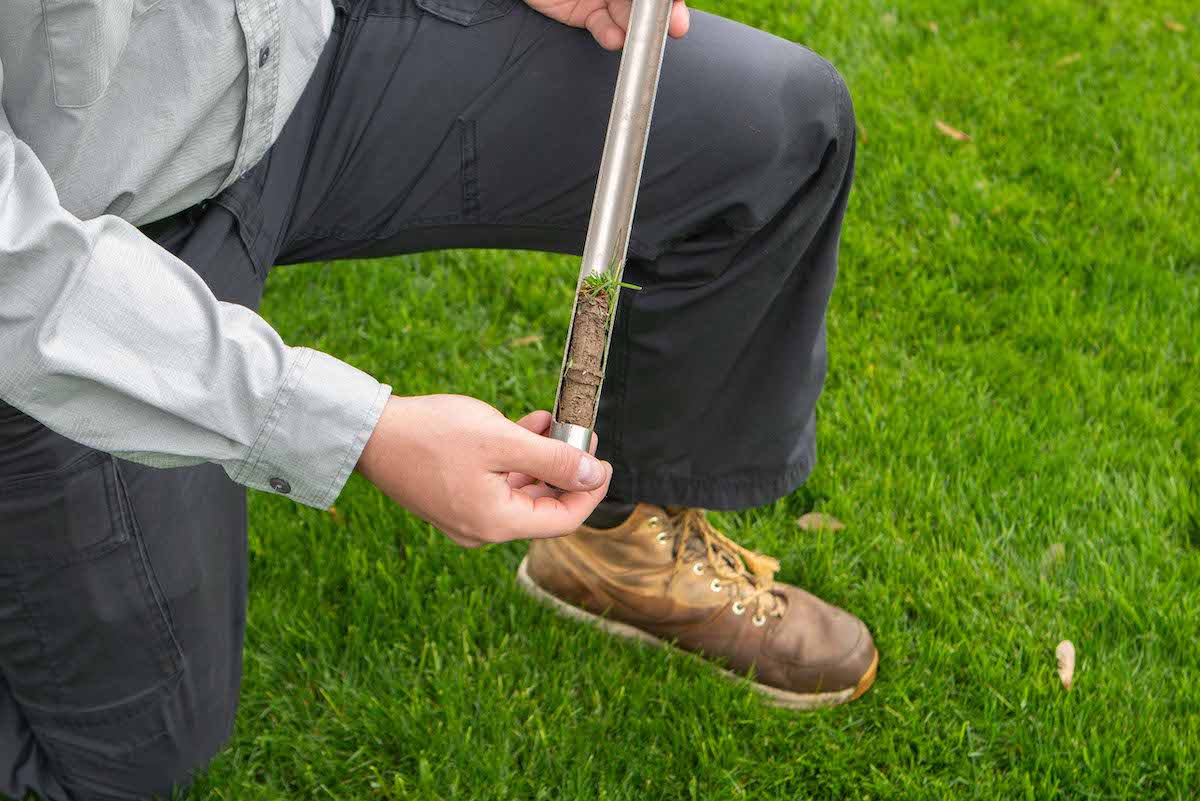
You may think that a healthy lawn depends only on the grass and how you care for it, but all you have to do is dig a little deeper to see that what lies below the surface is just as important: the soil.
Soil isn’t just dirt that gets under your fingernails or sticks to your shoes. It serves as the foundation of your lawn’s health.
In this article, we explore Northeast Ohio soil types, tips for improving Ohio soil quality, lawn care for Ohio soil, and more.
Why Soil Matters More Than You Think
So, what’s so special about your yard’s soil anyway? Here are a few reasons why soil health is so important to your lawn’s overall health:
- Drainage. The type of soil you have impacts how well your yard drains and how well it absorbs and retains water.
- Nutrient Absorption. In addition to determining how well your lawn holds onto water, your soil type can also impact whether or not the grass can easily take in nutrients.
- Root Development. Soil type can also play a major role in the growth, development, and spread of grass roots.
/inspecting%20lawn%20close%20up.jpg?width=1600&height=1067&name=inspecting%20lawn%20close%20up.jpg)
Northeast Ohio Soil Types
Your location within Mentor or a surrounding area likely influences which type of soil you have in your yard.
In this area, we typically have two types of soil: sandy or clay. If you live closer to Lake Erie or near a river bed, you’re most likely to have sandy soil. If you live more inland, and in a higher elevation area, you are more likely going to be dealing with clay soil.
Sandy Soil Characteristics
Exhibiting a gritty texture, sandy soil has a weak structure and can be acidic. It’s pretty easy to dig up, but it can easily erode or become compacted. Sandy soil also can warm up fast in the springtime and drains well. It also has the most space between its aggregates, meaning it dries out quickly.
Common Lawn Problems with Sandy Soil
Nutrient Leaching
This type of soil doesn’t tend to hold on to water, meaning nutrients can easily leach out.
Drought Stress
As the soil warms up quickly and drains fast, sandy soil is more prone to drying out and suffering from drought stress, especially during hot and dry summer spells.
Compaction
While it’s not always compacted, sandy soil can pack together tightly if it experiences a lot of heavy traffic, like kids or pets playing on the lawn. Lawn equipment, such as lawn rollers, can also significantly add to compaction problems.
Erosion
Because sandy soil isn't particularly heavy, its fine particles can easily be swept away by wind or water.
Poor Root Support
Sandy soil doesn’t gel together well and is typically pretty loose, so you may notice that plants with large root systems don’t thrive in these conditions.
Bare or Patchy Areas
The combination of the above factors can hinder thick, healthy grass growth, so you may also notice that your lawn features thinning or bare patches.
Grub Invasion
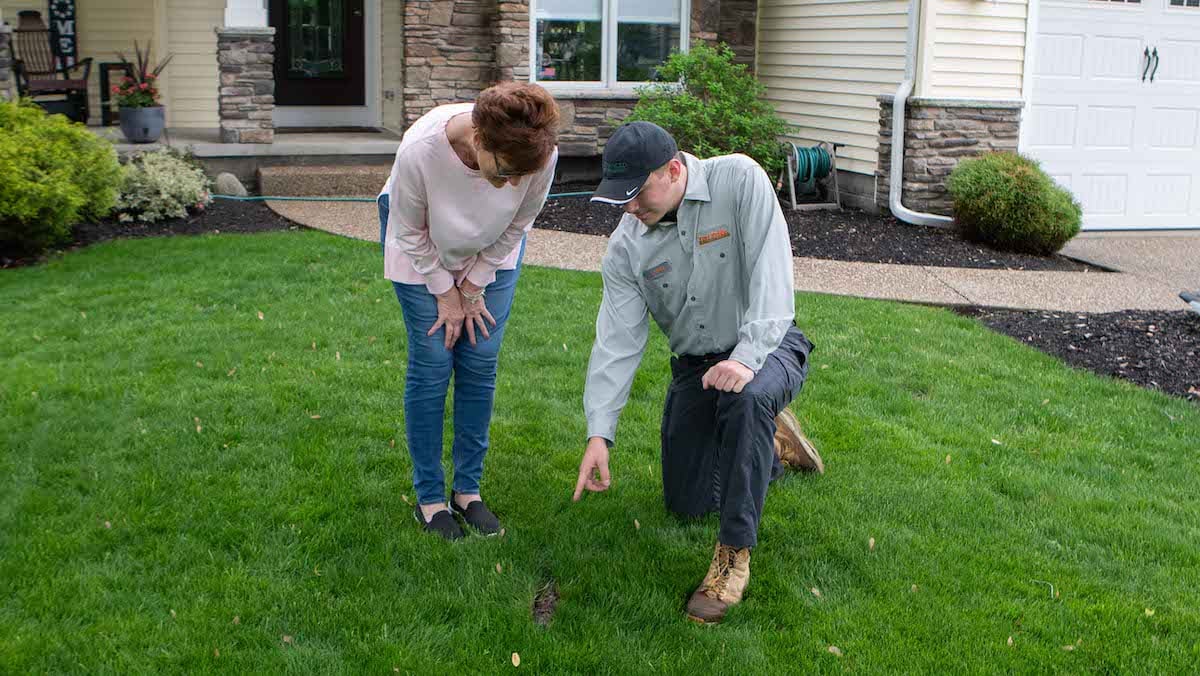
Loose sandy soil allows grubs to easily move through the soil. The best indicator of grub activity include loose turfgrass that picks up without any hinderance, like a carpet.
animals like skunks or raccoons digging through your lawn.
/Live%20Website%20Images/close-up-grubs.jpg?width=1280&height=960&name=close-up-grubs.jpg)
How to Improve Sandy Soil Quality
Now that you know some of the drawbacks of sandy soil, let’s get into how you can improve it.
Fertilization
Fertilizing the lawn, in the spring to promote upward growth, in the fall to maintain nutrient levels and fight against disease or stress, and in the fall to encourage root development, can help give your soil the extra boost of nutrients it needs to grow healthy grass.
Proper Watering
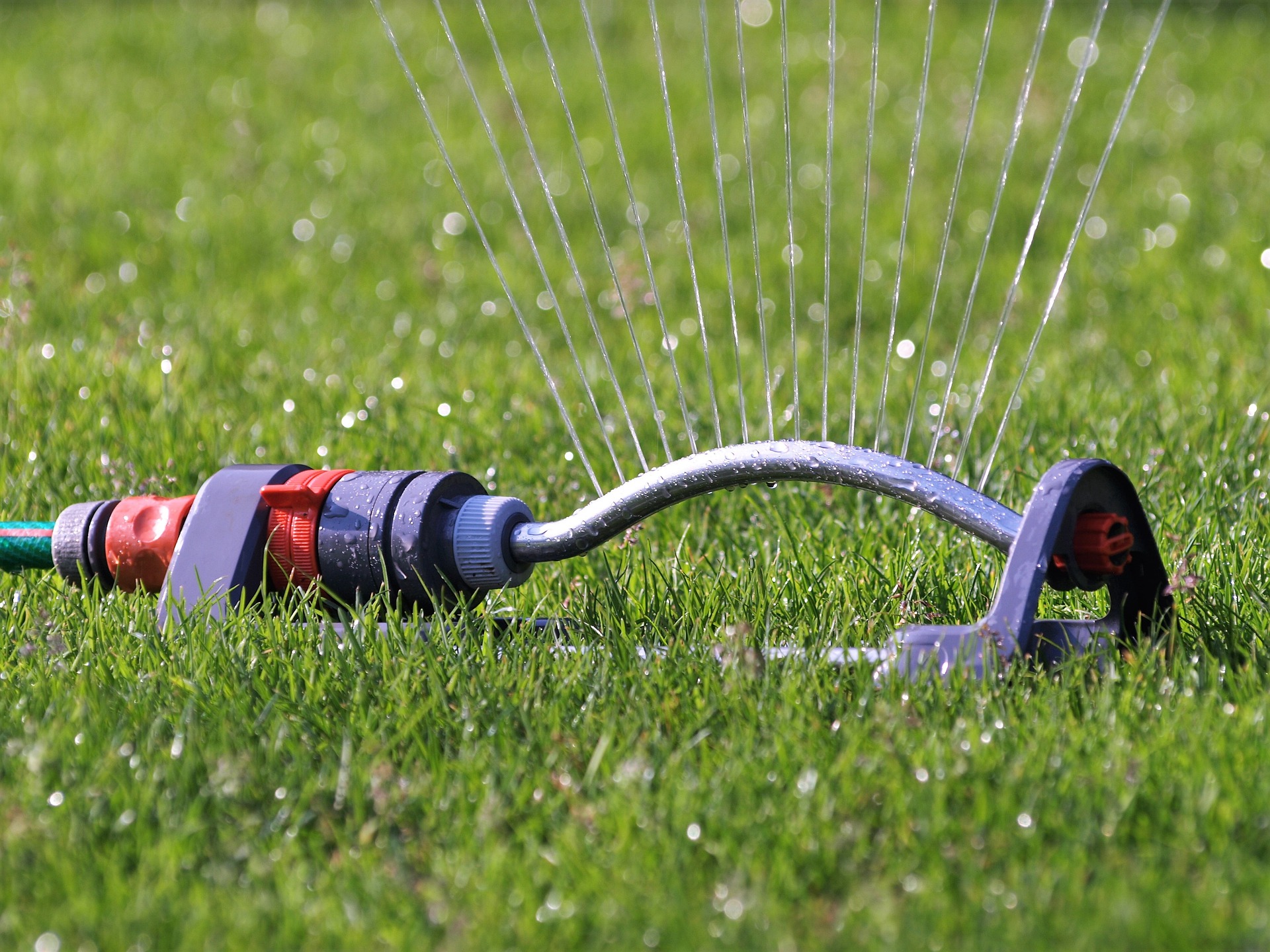
Especially in the summertime, you should take care to water your lawn so that it doesn’t dry out and become brown.
Pro Tip: If you have a lot of trees on your property, that can steal away water reserves, making it even more difficult to grow healthy grass in sandy soils.
Aeration
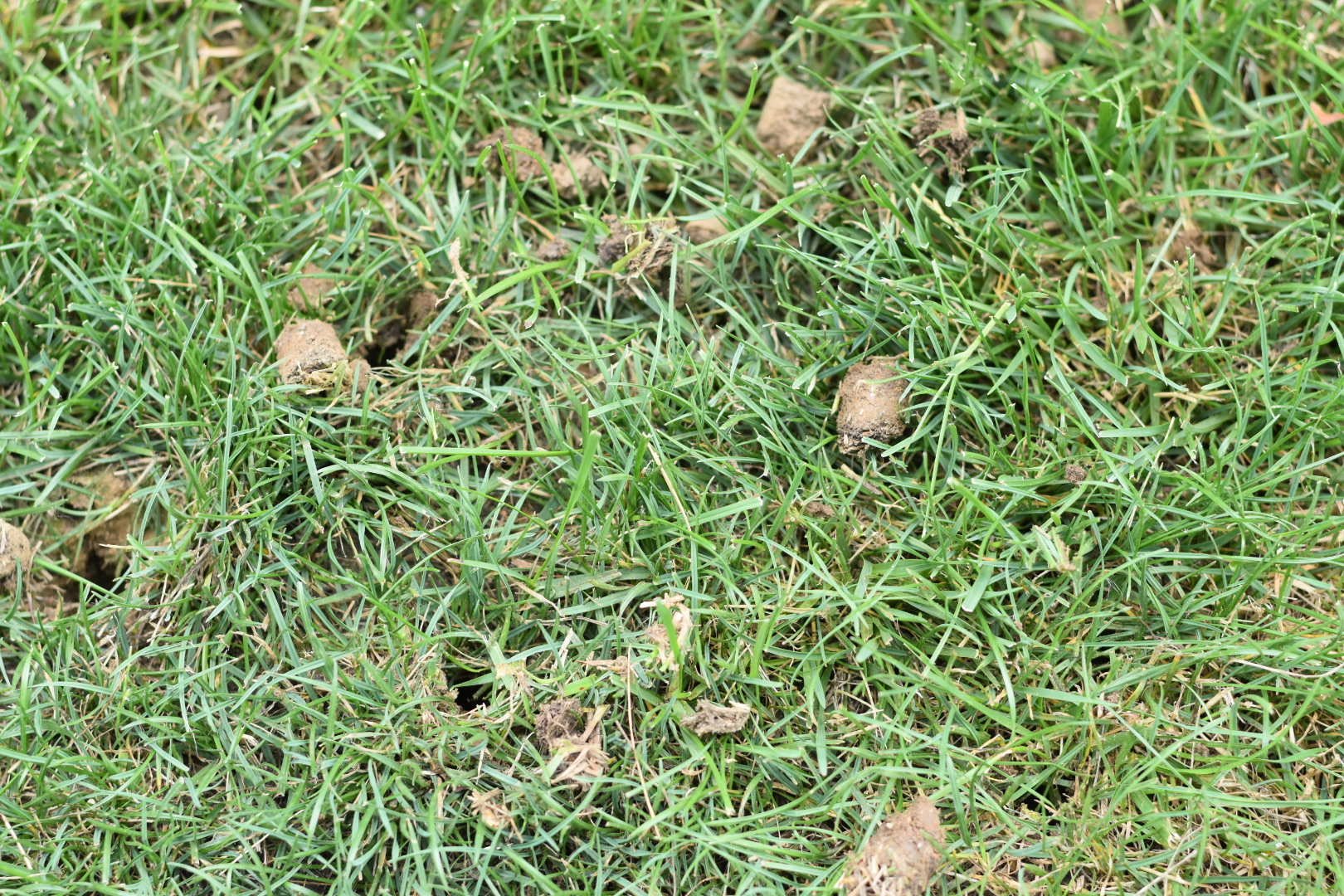
In addition to alleviating compaction and breaking up an unruly thatch layer, aeration can help water and nutrients penetrate deeper into the root zone.
Overseeding
Going hand in hand with aeration, overseeding helps introduce new turf varieties into the lawn as it fills up the tiny holes created from aeration with new grass plants. This can help thicken your lawn.
Grub and Insect Control
If you notice that your lawn is overrun by grubs, a grub control treatment can help keep them at bay. If you’re unsure whether it’s grubs plaguing your lawn, a certified expert can help you figure it out.
Clay Soil Characteristics
Clay soils are usually more neutral to slightly alkaline and very compacted. In some cases, the ground can even start to feel concrete-like. When it’s wet, it can be sticky, but when dry, it can appear cracked. Clay soil is heavier than sandy soil, and it retains water and nutrients well.
Common Problems with Clay Soil
Compaction
Perhaps the biggest issue with clay soil is its tendency to become compacted. The particles pack together tightly, leaving little space for anything else in between.
Drainage Issues
As the soil becomes compacted, this leaves areas that are more prone to water pooling, and you may see puddles throughout your yard that never seem to drain.
Thinning Areas
Clay soil can also leave you with bare or thinning spots because as the soil gets so tightly compressed, it cuts off space for grass roots to grow and prohibits water and nutrients to travel down to where the roots are located.
How to Improve Clay Soil Quality
Aeration
Aeration is one of the best ways to break up your soil, allowing better access for air, nutrients, and water to get to the roots.
Overseeding
If you do have any bare spots in your clay soil yard, overseeding can help take care of those after you aerate.
Pro Tip: Newer housing developments tend to feature clay or rocky soil, so it may be especially important to aerate and overseed each year if you’ve recently moved into a new home build.
Best Grass Types for Northeast Ohio Soil
It’s true that certain grass types perform better than others in Northeast Ohio climate conditions.
For instance, some grasses like tall fescue can perform well in both sandy and clay soil because it has a deep root system, so it can handle the drought-like conditions common in sandy soil but still penetrate through denser clay soil.
On the other hand, fine fescue and bentgrass for Ohio lawns may not be your best bet, especially if you have sandy soil, as they have a shallow root system and can dry out more quickly come June when the temperatures in Northeast Ohio start going up.
/front%20of%20home%20green%20lawn%20with%20large%20tree.jpg?width=1200&height=676&name=front%20of%20home%20green%20lawn%20with%20large%20tree.jpg)
Lawn Care For Ohio Soil
No matter what type of soil you have in your Northeast Ohio yard, implementing a lawn care program can be the key to unlocking a vibrant, green lawn. In addition to proper watering, fertilization, aeration, and overseeding, here are a few more lawn care tips to help improve your soil.
Proper Mowing
Mow your grass as needed, but set your cutting deck to a height of around 3 inches or higher and do not remove more than one-third of the grass blade. This helps reduce stress to your grass because you’re not lobbing off as much of the grass blade at a time.
Create a Compost
If you can, try not to bag your grass clippings. By mowing regularly and mulching those grass clippings back into the yard, you create a natural compost that provides nutrients to your lawn.
Topdressing
Topdressing introduces organic matter to the root zone and can also improve the soil’s overall structure, increase water and nutrient absorption, and alleviate compaction.
Soil Testing, pH Balancing, and Soil Amendments
If you’ve tried everything else and your yard is still experiencing issues, our technicians at Turf Pride can help you by taking a sample of your soil and sending it out to be tested.
A neutral soil pH level is around a six or seven, so if your pH level falls around a four or five or below, it may be a little too acidic, which can inhibit healthy grass growth.
To help raise the pH level, our technicians at Turf Pride can provide a lime treatment on an as-needed basis. You should note, however, that we typically do not need to amend the soil because our organic-based fertilizers can usually get the soil to where it needs to be for healthy grass growth.
Turf Pride: Expert Lawn Care From the Ground Up
When your lawn problems run deep, we at Turf Pride have you covered.
Our trained and certified technicians have been cultivating healthy lawns in the area for over 20 years. When it comes to soil and grass management, we’ve sifted through it all and can help you get to the root of your lawn’s issues.
/office%20staff%20on%20phone%20with%20customer.jpg?width=1200&height=676&name=office%20staff%20on%20phone%20with%20customer.jpg)
Call today or request a free quote online for a lawn evaluation.