

/TurfPrideSpring2022(WebOptimized)-437.jpg)
7 Reasons Overseeding Isn’t Working — And How to Fix It
Have you ever tried overseeding on your own, only to have it not work, leaving you in an ongoing cycle of reseed and repeat?
There are a few reasons why your overseeding efforts may not be working, but before you give up altogether, check out this blog to learn about why overseeding fails, common overseeding problems and solutions, and how you can finally achieve a lush, healthy lawn.
Why Overseeding Doesn’t Always Work in Northeast Ohio
There are a few reasons why overseeding may not produce the results you’re looking for.
For instance, in Mentor and surrounding suburbs, you may be up against factors such as heavy clay soils, short growing windows, and tree-heavy yards, all of which can impact your lawn’s health.
Compacted clay soils provide very little space for grass roots to take hold and make it hard for oxygen, nutrients, and water to flow to the grass roots.
And, because this region features short growing windows, you also have a limited time within the year to overseed.
On top of that, your grass may also struggle if you have a heavily shaded yard with lots of trees because grass requires at least four hours of sunlight to survive.
So, while overseeding is a viable way to fill in thinning or bare spots in your lawn, introduce new grass varieties to your yard, and thicken up your yard, it’s not a “spread and hope” situation.
To achieve success in this area, the process is often performed in conjunction with aeration, which reduces your lawn’s compaction and thatch buildup by pulling small cores or plugs from the soil, enabling water, air, and nutrients to more easily move through.
For optimal overseeding results, you also have to make sure you’re using the right types of grass for Northeast Ohio’s climate. Cool-season varieties that usually work well include:
- Perennial ryegrass, a dark green grass that boasts a quick germination period
- Kentucky bluegrass, a lush grass type that’s greenish-blueish in color
- Tall fescue, which, with its strong root system and wide blade, can withstand chewing pests, drought conditions, and the wear and tear that comes with highly trafficked areas
Now that you have the basics of aeration and overseeding down, let’s dig deeper into why your current overseeding practices aren’t working.
Reason #1: Poor Seed-to-Soil Contact
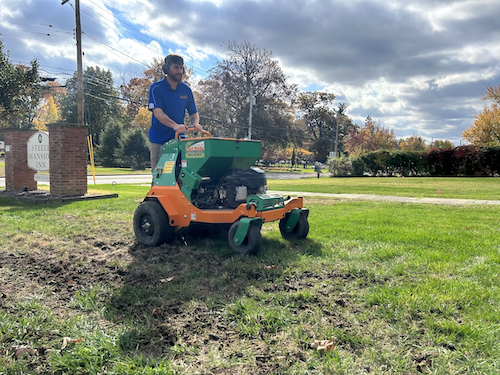
One of the biggest mistakes you can make when overseeding is only spreading the grass seed on the surface of your lawn without covering it or adding topsoil.
The seed needs the soil aggregates in order to take root. If you’re only spreading seed over the thatch layer, you’re not doing much more than feeding the birds.
This is where core aeration can help provide spaces for the grass seed to latch into the soil and take root.
Reason #2: Overseeding at the Wrong Time of Year
Timing is everything when it comes to overseeding.
Overseeding in Northeast Ohio is best done in late summer to early fall, or between Aug. 15 and Oct. 15. This is because fall brings cooler temperatures and more consistent rainfall.
In the summer, the heat stress can be too much for the new seed, causing it to dry out or grow inconsistently. Plus, competition from crabgrass is high during this time.
Seeding too late in the season will not allow enough time for the seed to establish roots. If the grass starts to grow and a hard frost occurs as the new blades become visible, the grass can die off, so be sure to allow five to six weeks before a hard frost to plant seed
Pro Tip: If you seed in mid-October and Mother Nature brings an early frost, be patient as you may see the full establishment of grass the following May or June.
While spring may seem like a good time to overseed, with its rainier days and cooler temperatures, it also brings unpredictable weather and higher weed pressures.
Reason #3: Mowing Too Short or Too Soon
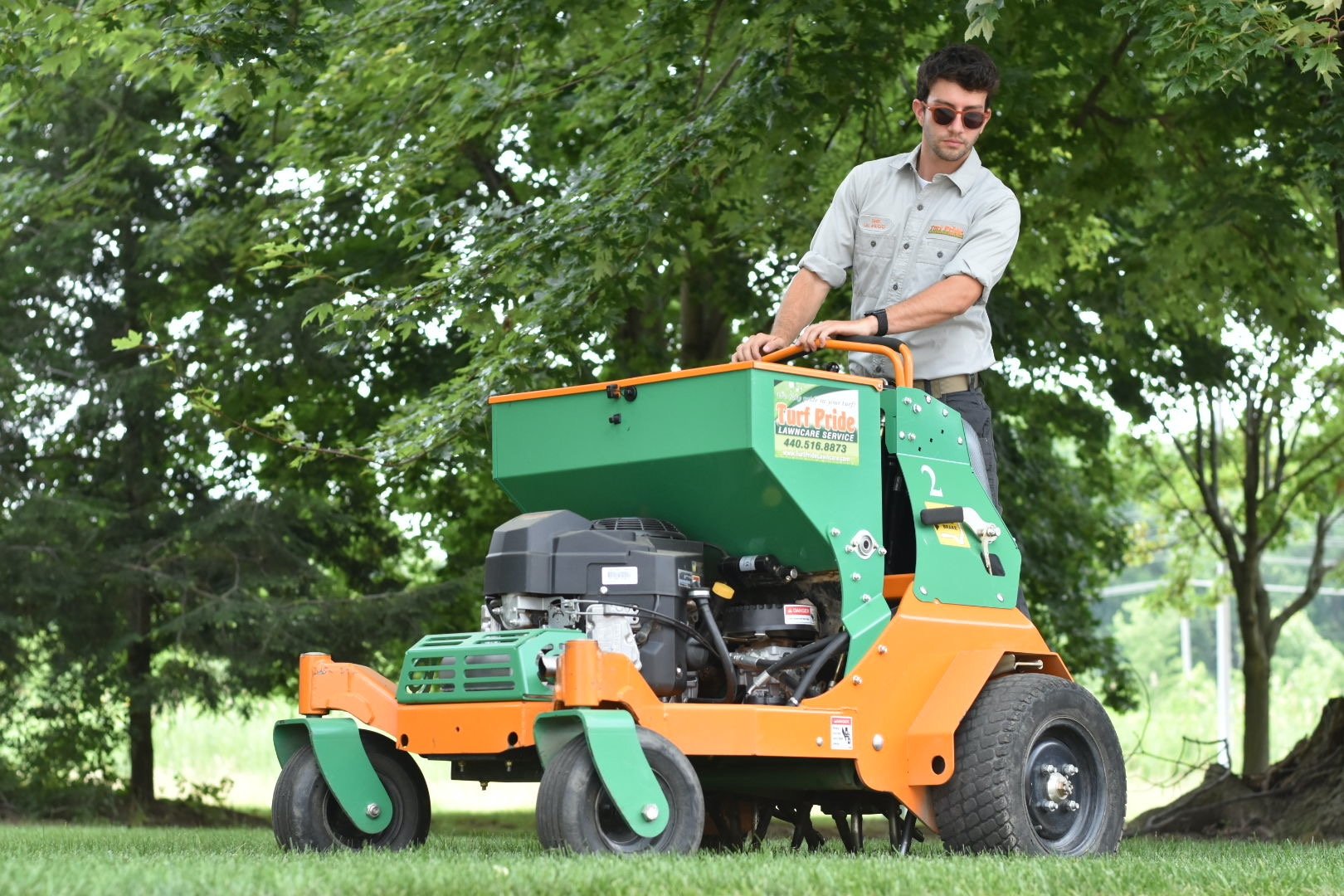
Mowing your grass a little shorter than usual before overseeding is OK, but be careful that you do not scalp your grass as this can exacerbate stress on your lawn and also open up the possibility of weed infiltration.
After overseeding, make sure the grass is kept at a height of about 3 inches to help protect the seedlings.
Also note that cutting the grass too early after putting down seeds can damage or even kill the fragile seedlings.
/lawn%20mowing%20height.jpg?width=1200&height=676&name=lawn%20mowing%20height.jpg)
Reason #4: Skipping Soil Preparation and Fertility
Fertilizer doesn’t just provide a boost for established grass. It can also help support seedling growth and development and help remedy soil nutrient deficiencies.
A starter fertilizer, one that’s high in phosphorus, can be applied right before or right after overseeding to encourage root development and vigorous growth.
Overseeding can also work in tandem with regularly scheduled fall fertilization to help fortify your lawn over the winter months.
/Testing%20soil%20technician.jpg?width=1600&height=1067&name=Testing%20soil%20technician.jpg)
Reason #5: Pre-Emergent or Weed Control Interference
While it might seem like a good idea to check off all your lawn care to-do’s at the same time, pre-emergent weed control can actually block root formation in the germination process by creating a chemical barrier.
As the roots contact this barrier, they stop growing and die off. Think of it as a “wall” in the soil that keeps seeds from growing, causing you to have patchy and inconsistently thin turf.
You should also remember that pre-emergent weed control can last for weeks to months in the soil, and watering the area will not do anything to remove it.
What’s more, broadleaf weed control is detrimental to new grass blades, so it is necessary to hold off on treating dandelions, clover, and other broadleaf weeds until the new grass matures enough that it has been mowed three to four times.
Pro Tip: There is one exception: Products with the active ingredient mesotrione (found in Tenacity) allows grass seed to germinate while suppressing many weeds, so it is safe to use at seeding time.
/TurfPrideSpring2022(WebOptimized)-505.jpg?width=1600&height=902&name=TurfPrideSpring2022(WebOptimized)-505.jpg)
Reason #6: Inconsistent Watering After Seeding
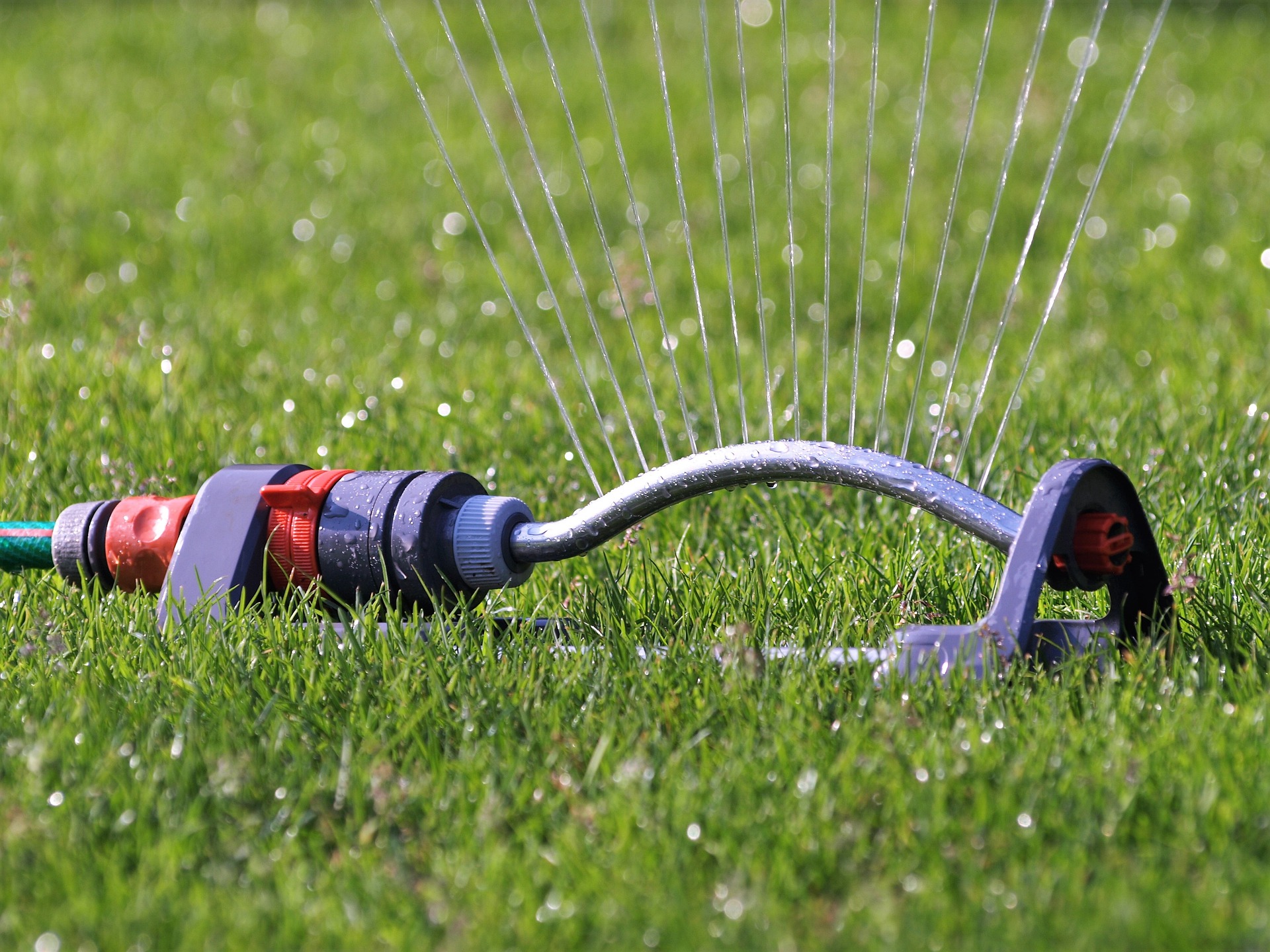
New seed should be watered regularly for at least two weeks so there is ample moisture for the seed to germinate properly.
Instead of watering deeply like you would for established grass, think light, frequent watering to help keep the grass seeds moist. Be careful not to overwater as this can hinder new seedlings as well.
Northeast Ohio’s fall weather can assist in the process with its cooler temperatures and increased rainfall.
If you notice that the seedlings have turned brown, yellow, or a grayish-purple and feel brittle, that may be a sign that they’ve dried up.
Reason #7: Improper Amount of Seed
You also have to pay attention to the amount of seed being planted.
For example, putting down too little seed will not fill in larger thin areas properly, and applying too much seed will not allow enough space for the grass seedlings to grow.
You should also be careful not to misapply seeds in areas where you don’t want grass to grow, like your landscape beds.
How to Fix Overseeding Issues the Right Way
Now, let’s talk about repairing overseeding issues.
In order to fix overseeding issues, it’s important to take a step back and evaluate what may have gone wrong.
Ask yourself the following questions:
- Did I overseed at the right time?
- Did I fertilize, water, and mow properly and at the right time?
- Did I forgo weed treatments around this time?
- Did I pair overseeding with aeration to ensure the seeds reached the soil?
- Did I use the right amount of grass seed?
- Did I use grass seed appropriate for Northeast Ohio’s climate?
- Have I practiced an integrated management approach throughout the year, which includes fertilization, weed control, and proper cultural practices?
If you’ve answered “no” or “I’m not sure” to any of the above questions, that may be your clue as to what went wrong.
If you’re still feeling stuck, a professional lawn care specialist may be able to help.
Not only can a professional recommend the appropriate seed mix, but they also use equipment that allows them to be precise, meaning there’s less seed loss to the environment, better germination rates, and less risk of grass seed growing in your flower beds.
After a treatment from Turf Pride, for example, perennial ryegrass should be visible in about two weeks, and by the winter months, you should see the Kentucky bluegrass and turf type tall fescue grasses appearing.
It’s important, however, to be patient and wait until the following April or May to see the results.

When DIY Overseeding Isn’t Enough
If you’ve followed the appropriate steps, but your lawn is still looking thin or unhealthy, that may indicate that you have a deeper issue like poor soil quality, shade, tree roots, poor drainage, or drought conditions.
Your lawn may also be suffering from pest and disease pressure or grub damage.
This is where an integrated management approach really comes into play. Think about it like looking at the whole picture of your lawn’s health instead of just zeroing in on one element.
So, instead of treating overseeding like a “one and done” treatment, be sure to include other practices in your lawn care regimen like aeration, fertilization, and weed control, along with proper watering and mowing.
Long-Term Lawn Renovation
In some cases, overseeding and aeration may not cut it to remedy your lawn’s issues.
If you have thin or bare areas that are larger in size than a dinner plate, your yard may require more seed in the soil for greater germination.
At Turf Pride, we would recommend our lawn renovation program to help revive your yard. This program includes aeration, slice seeding, and a starter fertilizer treatment. A lawn care specialist can help determine if this is necessary.
Get Professional Overseeding Results in Mentor & Northeast Ohio
If your lawn’s looking a little thin, we’ve got it covered—literally.
At Turf Pride, we focus on the building blocks of overseeding, aeration, fertilization, and weed control to build healthy Northeast Ohio lawns from the ground up, so you can enjoy your yard all season long.
/Live%20Website%20Images/turf-pride-receptionist-on-phone.jpg?width=1200&height=676&name=turf-pride-receptionist-on-phone.jpg)
Get a healthier, thicker lawn this season. Call today or request a free quote.