

/Technician%20showing%20brown%20spot%20on%20lawn.jpg)
Why Your Lawn Browns Along Driveways, Sidewalks, and Curbs & How to Fix It
Is the grass along the borders of your lawn looking a little worse for wear? Does it seem like your grass is browning near the curb or dying beside the pavement?
Even more perplexing, does the grass in these areas look perfectly healthy during cooler, wetter weather but struggle once summer heat arrives?
If you’re wondering why your grass seems determined to turn brown everywhere it meets pavement, especially during the summer months, you’re not alone. These issues are common in Northeast Ohio, but the good news is that there are ways to fix it.
To dig into the problem and explore possible solutions so you can get back to where the grass actually is greener, let’s discuss:
- Why Does Grass Brown Along Driveways, Sidewalks, and Curbs?
- How Pavement Creates Extra Heat That Stresses Your Lawn
- Why Dry Soil Near Pavement Can Leave Your Grass Thirsty
- How Soil Compaction Makes Edge Problems Even Worse
- Why Winter Salt Can Cause Damage That Shows Up Months Later
- Whether Grubs, Disease, or Fertilizer Burn Could Be the Problem
- How to Restore Brown Grass Along Driveways and Sidewalks
- FAQs About Lawn Browning
- How Turf Pride Helps Northeast Ohio Lawns Stay Green from Edge to Edge
Why Does Grass Brown Along Driveways, Sidewalks, and Curbs?
There are several reasons why lawn browning along the edges in your yard is more common than in the middle of your yard.
The most common cause is heat and drought stress caused by the turf’s proximity to hot asphalt or concrete. Other possible causes include compacted or shallow soil, winter salt damage, mower or string-trimmer injury, or sometimes insects.
Just remember that it’s crucial to properly diagnose the issue so you can go about treating it the right way.

Pavement Creates Extra Heat That Stresses Your Lawn
Because concrete and asphalt absorb heat from the sun all day and then radiate that heat outward, the soil next to those surfaces increases in temperature. That means the grass growing in that soil is more susceptible to heat stress.
For this reason, you may really notice browning grass during summer heat waves in Northeast Ohio.
Dry Soil Near Pavement Can Leave Grass Thirsty
Not only do the warmer temperatures cause grass near pavement to become stressed, but it can also lead to these sections drying out faster.
This happens for a number of reasons:
- Water tends to evaporate more quickly in these areas thanks to higher soil temperatures and more exposure to winds that can pull moisture away from the grass blades.
- The shallower roots typical of grass located near pavement dry out faster.
- Water often runs off from sidewalks and driveways before the grass has a chance to absorb it.

Soil Compaction Makes Edge Problems Even Worse
Soil compaction can exacerbate the problem.
For instance, during construction, soil next to sidewalks and driveways is often heavily compacted and contains gravel and construction debris. All of that can leave turf with a shallow root zone, reduced oxygen levels, and poor water penetration.
After construction, further causes of compaction may happen every single day, including:
- High foot traffic from humans and pets
- Increased vehicle traffic
- Piles of snow accumulating throughout the winter
Remember that turf growing in compacted soils tend to struggle more during hot weather, so that may be when you notice browning the most.
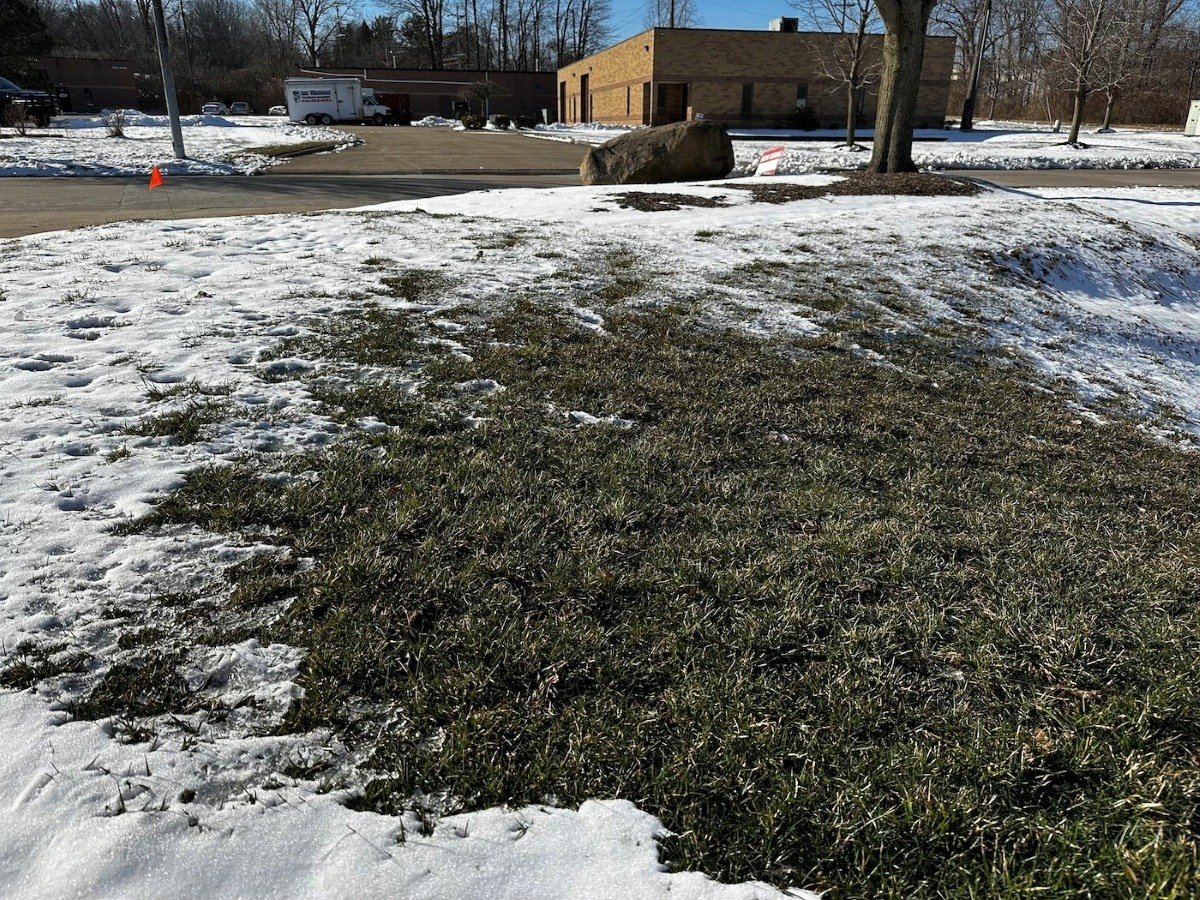
Winter Salt Can Cause Damage That Shows Up Months Later
Salt used to treat roadways, driveways, and sidewalks can also cause browning when it accumulates in the soil and interferes with the grass plant's ability to take up water. It can also damage roots and affect soil structure.
This type of damage often shows up in linear strips adjacent to the treated pavement or asphalt area and may begin to appear in winter or spring. The weakened turf usually becomes much more noticeable once summer heat and drought add more stress.
Just keep in mind that not every brown edge is salt damage.
Could Grubs, Disease, or Fertilizer Burn Be the Problem?
While it’s possible that insects like grubs or diseases could be causing the grass near pavement to turn brown, insect and disease problems typically have other patterns or symptoms and aren't limited so neatly to pavement edges.
More often than not, the problem may be caused by fertilizer burn, pet damage, or mowing or trimming the lawn too short.
If you fertilize your lawn in the summer, try to avoid quick-release fertilizers that can suck moisture from the turf. Rather, use a slow-release fertilizer that provides the grass with the nutrients it needs over time.
In a few cases, however, insects may be the problem. For example, chinch bugs tend to favor the hotter, drier spots near pavement.
Pro Tip: If you think you have chinch bugs in your grass, insert a metal coffee can with both ends removed a few inches into the soil and then fill it with water. If you have chinch bugs in your lawn, they will float to the surface.
No matter what the issue is, it’s best to ask for professional help to identify the real cause of the browning.
How to Restore Brown Grass Along Driveways and Sidewalks
The first step to grass recovery is determining why your turf browned. From there, you can determine which solution is best.
Heat and Drought Stress
Proper watering is key. Your lawn’s edges may need some additional attention during prolonged hot, dry periods. Overall, your lawn should receive 1-2 total inches of water per week, delivered over the course of two to three sessions.
Compaction
To help alleviate compaction, core aeration can improve air, nutrient, and water penetration and root development. Overseeding can help fill in bare spots from there.
Poor Soil Health
Fertilization can help enhance soil health and give your grass the nutrients it needs to thrive.
Winter Damage
If your lawn has sustained salt damage over the winter, a comprehensive lawn care program that includes fertilization, weed prevention, aeration, and overseeding can help with recovery. Be sure to water your lawn appropriately as well.
In general, you should also take care to mow your yard in a way that limits damage. In the summertime, set the cutting deck on your mower to a height of 4 to 4.5 inches to help protect the grass blades and allow them to conserve water. Also be careful to never remove more than one-third of the grass blade in order to limit turf stress.
Is My Lawn Actually Dead?
Before deciding that your turf is truly dead rather than simply dormant, wait until hot, dry conditions have passed. Once temperatures moderate and adequate moisture returns, the lawn can green back up.
If it's dormant, the top growth will have turned brown while the crown and roots remain alive, so keeping it appropriately watered and waiting for cooler conditions may be all that's necessary.
If you’re unsure, a professional lawn care provider can help diagnose and treat the issue.
If it’s determined that your turf is actually dead, late summer into early fall is generally an excellent time in Northeast Ohio to reseed because soil temperatures are warm while air temperatures begin cooling.
A total lawn renovation may be necessary if you have significant bare patches throughout the yard, excessive pet damage, or if weeds cover the majority of your yard.

FAQs About Lawn Browning
What’s the biggest mistake homeowners commonly make when trying to fix brown lawn edges themselves?
One of the biggest mistakes is assuming that brown grass needs more fertilizer or more weed control. If the real problem is heat or lack of moisture, adding products won't solve it and can sometimes add more stress.
What’s the best way to water my lawn to prevent browning at the edges?
Avoid watering the entire lawn lightly for a few minutes because while the middle of the lawn may be getting enough moisture, it’s possible that the edges are still drying out. Instead, water your grass deeply about two to three times per week for a total of 1 to 2 inches.
When should I reseed brown areas of my lawn?
It’s tempting to want to fix the problem right away but wait to reseed brown areas until cooler fall weather.
Also note that if the underlying problem hasn't been corrected, the new seed is likely to struggle too.
How do I know whether I should wait for recovery or reseed?
Remember that when it comes to grass, brown does not always mean dead.
Cool-season grasses common in Northeast Ohio can go dormant during periods of high heat and drought.
A good rule of thumb is that if the brown area perfectly follows a driveway, sidewalk, or curb, look at heat, moisture, soil depth, and compaction first before assuming that insects, disease, or a lawn-care application caused the problem.
How Turf Pride Helps Northeast Ohio Lawns Stay Green from Edge to Edge
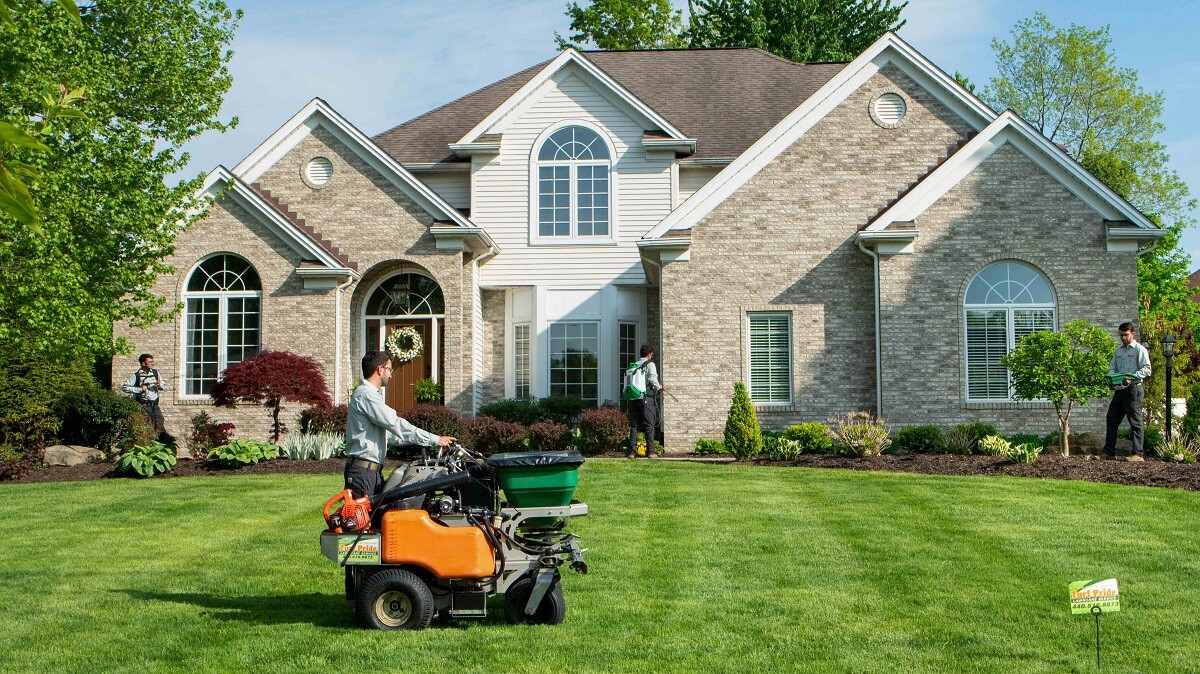
If you’re ready for a lawn that’s green from end to end, enlisting the help of a lawn care service in Northeast Ohio — like Turf Pride — may be right for you. Request a free estimate from Turf Pride today.