

How to Tell If Your Lawn Needs Aeration in Northeast OH (Or If You're Wasting Your Time)
Your grass may not have a voice, but it still has ways of telling you something is off. You just have to pay attention.
Have you ever stepped on your lawn and noticed that the ground feels hard or compacted? Do water puddles collect in your yard after a big storm? Does your grass look a little thin these days?
If you’ve experienced any of the above scenarios, those may be signs your lawn needs aeration.
Let’s take a look at what lawn aeration does, how to tell if your lawn needs aeration, when to aerate lawns in Ohio, and more.
What Lawn Aeration Actually Does (And Why It Matters)
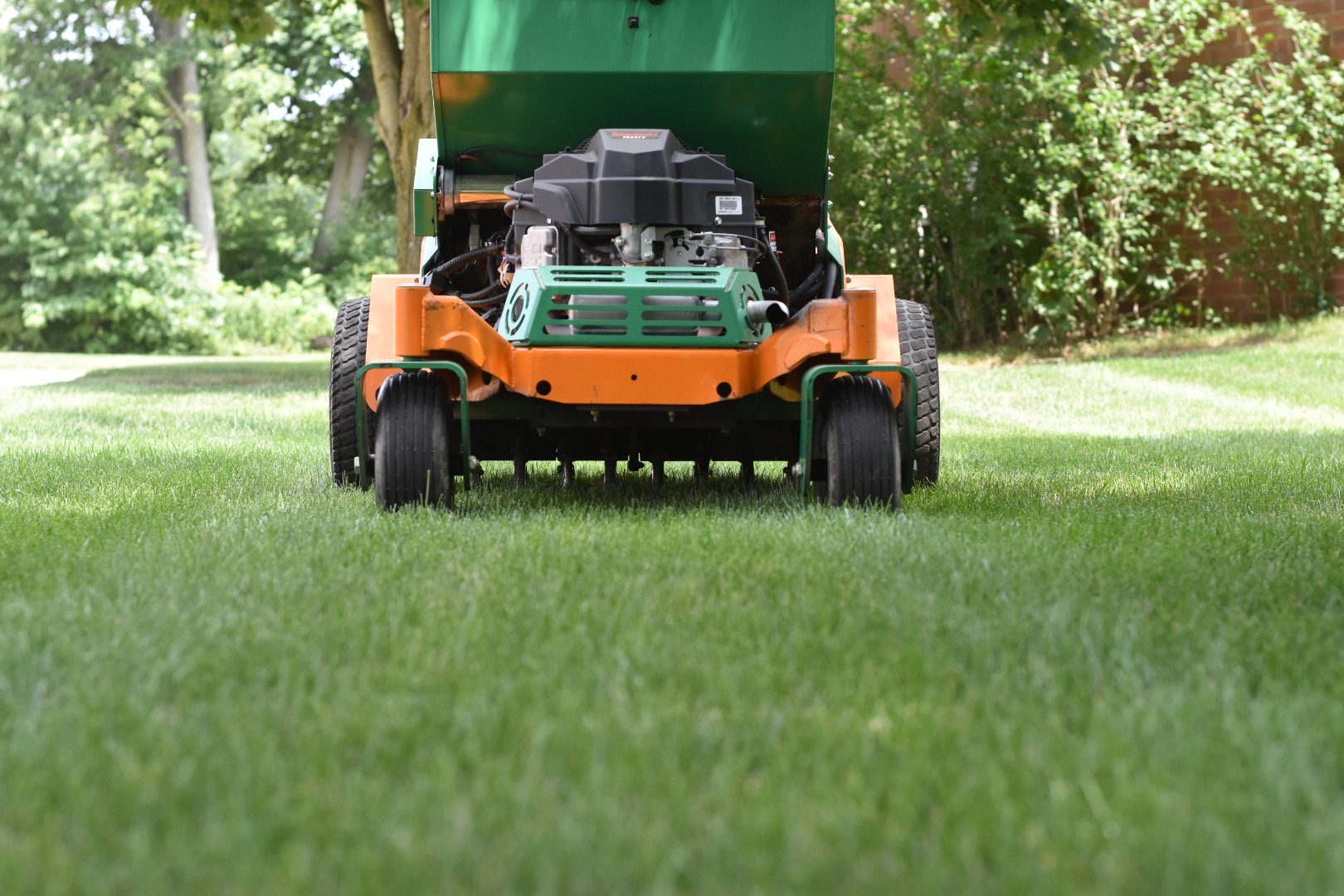
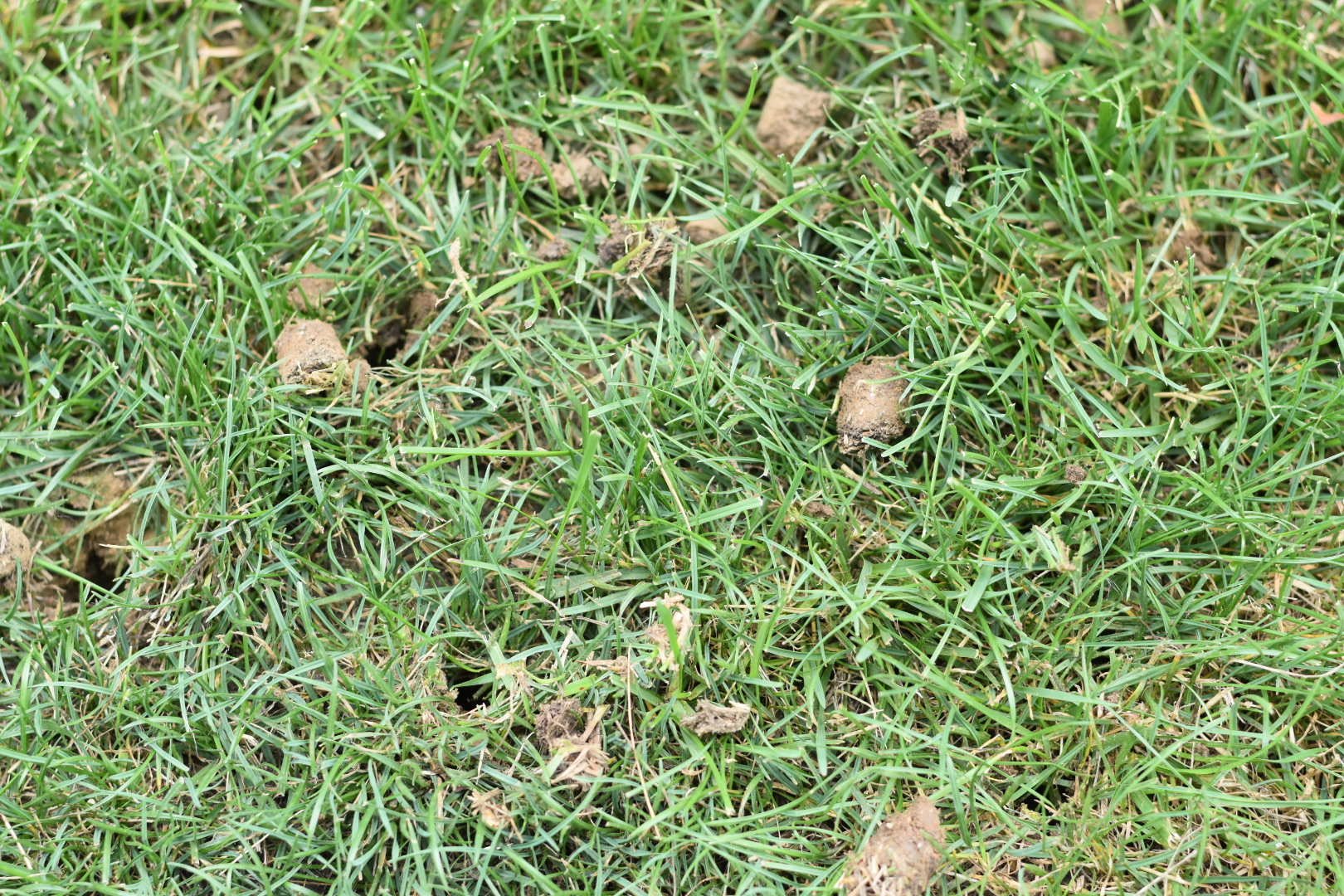
Lawn aeration in Northeast Ohio involves creating 3- to 4-inch holes in your lawn to break up the thatch layer and relieve soil compaction, a phenomenon where soil particles become compressed together.
If you’re wondering why anyone would go through all that trouble just to break up compaction, remember that compacted soil in a lawn can block the air, nutrients, and water your lawn needs to thrive.
Just remember that how you aerate your lawn matters. While core aeration uses a machine that actually pulls out plugs of soil, spike aeration involves only piercing the soil, which won’t provide as many benefits over time.
Why Aeration and Overseeding Work Better Together
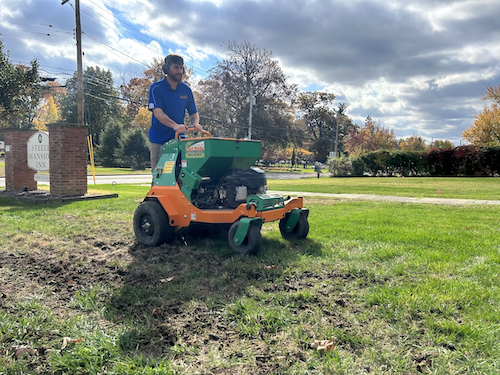
For good measure, it’s also a smart idea to immediately overseed after aerating to help improve turf density, fill in bare spots, introduce new grass varieties to your yard, and enhance the long-term health of your yard.
While aerating and overseeding can both be done without the other, there are numerous benefits to doing both at the same time.
This is because when you aerate and overseed in tandem, you’re dropping the grass seed directly into the holes just created. This seed-to-soil contact eliminates waste and provides those seeds with the best possible conditions to flourish.
Why Many Northeast Ohio Lawns Develop Compacted Soil
So, why are aeration and overseeding especially important for Northeast Ohio lawns?
In this region, soil compaction is relatively common, with several factors contributing, including:
- Clay-heavy soils, common in higher elevation areas and more inland, are very prone to compaction.
- Sandy soils, seen closer to the shores of Lake Erie, can also become compacted as they dry out.
- Rainfall, a given during the spring and summer months in Northeast Ohio, can also cause compaction by breaking down the soil aggregates and pulling soil particles closer together.
- Kids, pets, and other foot traffic tromping through your lawn add to a dense top layer.
- Lawn equipment, like mowers, rolling through your yard can compress the soil even more.
/Crew%20looking%20closely%20at%20lawn%20with%20truck.jpg?width=1600&height=902&name=Crew%20looking%20closely%20at%20lawn%20with%20truck.jpg)
Signs Your Lawn Needs Aeration
If you’re curious about when it’s time to aerate, below are six signs that aeration and overseeding) may be a good idea for you.
1. Water Pools on Your Lawn After Rain
If you see puddles of water throughout your lawn every time it rains, that likely means the water can’t penetrate the soil, causing it to run off rather than absorb into the ground.
2. Your Grass Looks Thin or Struggles to Grow
Because compaction inhibits the flow of essential nutrients, water, and air, compacted soil limits root growth, causing your grass to look thin or patchy.
3. Your Soil Feels Hard When You Push a Screwdriver Into It
If your yard feels hard when you step on it, there is a DIY compaction test you can try: Push a screwdriver into the yard. If it doesn’t slide in easily, you probably have compacted soil.
4. Your Lawn Gets Heavy Foot Traffic
If your yard is the hub for kids, dogs, and backyard gatherings, it probably sees a lot of foot traffic, which increases its compaction risk.
5. You Have Thatch Buildup
Thatch is the collection of organic material, dead and living, that’s on the surface of soil.
While a thatch layer that’s less than a half-inch thick is essential to help the grass retain water, protect the soil from sun, and enable the grass roots to absorb water and nutrients, anything thicker may make it difficult for the soil to receive what it needs.
Aeration can help break up this layer and keep it under control.
6. Your Lawn Hasn’t Been Aerated in Several Years
If you can’t remember the last time your lawn was aerated, that’s another sign it probably needs it.
It’s generally recommended that you aerate once per year. If you have an old lawn or a new one where the topsoil has been stripped away and you’re left with compacted, rocky soil, even twice a year may be a good idea. If your lawn is established and healthy, you can get away with aerating every other year.
/Live%20Website%20Images/aeration%20holes%20plugs.jpg?width=1800&height=1350&name=aeration%20holes%20plugs.jpg)
When Aeration Might NOT Be Necessary
There are a few instances in which aeration may not be the move for you
For example, if you have a newly installed lawn, whether by sod or seed, the weight of the aerator or tines digging into the ground can actually damage ground that is too soft or sod that is not rooted into the natural soil.
If your lawn is saturated by rain or watering, it’s also a good idea to hold off.
Other cases where you may be able to skip aeration include if your lawn has recently been aerated, experiences little to no foot traffic, and exhibits strong growth.
The Best Time to Aerate Lawns in Northeast Ohio
In Northeast Ohio, late summer into early fall provide the optimal conditions for aerating.
Aerating in the fall enables the cooler air temperatures and warmer soil temperatures to help grass recover from summer heat stress. Plus, aerating and overseeding at this time allows your grass to reap the benefits before winter hits.
While spring also boasts proper seeding conditions, like moist soil and optimal soil temperatures, pulling thousands of plugs from your yard can open up space for weeds to take hold. And, if you try to tackle those weeds with preemergent weed control, that may negatively impact the new grass seed.
Should You Rent an Aerator or Hire a Professional?
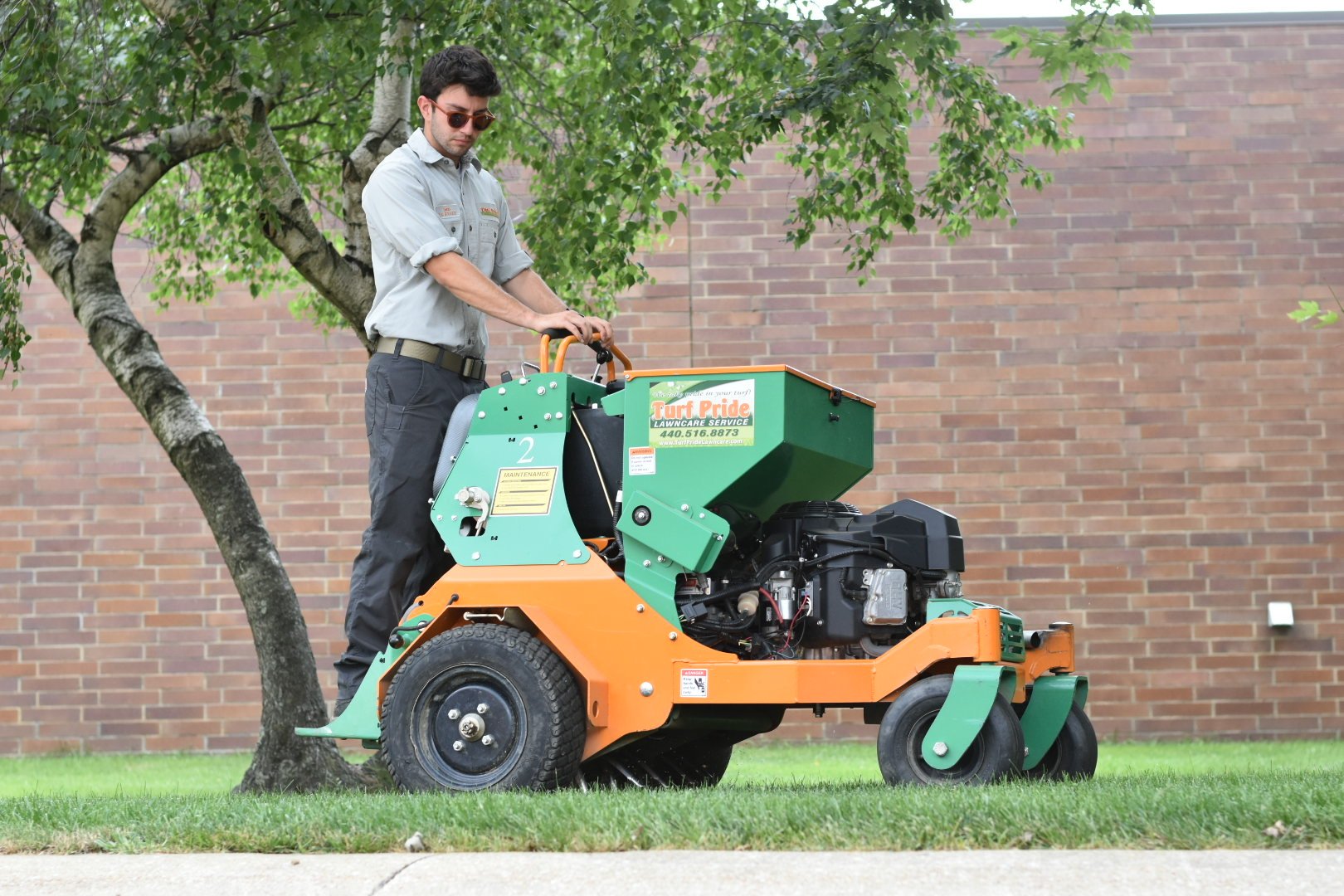
While it’s possible to aerate and overseed by yourself, it may end up being more of a hassle than it’s worth.
For example, if you decide to tackle these tasks on your own, you will have to consider the following questions:
- Where will I rent the aerator? Will there still be equipment available?
- Is the machine high quality?
- How much will the rental cost? How much will grass seed cost?
- How will I transport the machine home?
- Is the machine easy to use?
- How much time will it take to aerate and overseed?
- Am I knowledgeable about how to safely use the machine?
- What’s the proper plug depth?
- When can I slate in time to perform these tasks?
- Am I sure I won’t accidentally cause damage to my yard?
- Have I taken into consideration potential obstacles like tree roots, sprinkler heads, rocks, and hidden objects like pipes?
With so many things to consider, your best bet may be to hire a professional.
/technician%20talking%20to%20customer%20in%20front%20lawn.jpg?width=1600&height=902&name=technician%20talking%20to%20customer%20in%20front%20lawn.jpg)
Aeration and Overseeding FAQs
When will I see the benefits of aeration and overseeding?
If you don’t see results of aeration and overseeding right away, don’t panic.
How a newly seeded lawn is watered is the first thing to consider. At Turf Pride, after each overseeding, we provide proper watering instructions. If followed correctly, you should see the new grass coming up within seven to 10 days, assuming Mother Nature has also provided the proper temperatures.
The lawn conditions at the time of aeration and overseeding also come into play. If a lawn has bare spots larger than the size of a dinner plate, these will not fill in completely. You can expect the majority of the results to appear in May or June of the following spring.
What type of grass does Turf Pride use for overseeding?
At Turf Pride, our grass seed is a mixture of the following grass types:
- 10% perennial ryegrass
- 10% Kentucky bluegrass
- 80% tall fescue
The perennial ryegrass will likely emerge first within two weeks, but the Kentucky Bluegrass and tall fescue will take longer.
Is there anything I need to do after Turf Pride aerates and overseeds?
Watering in the grass seed is crucial. It’s also a good idea to minimize foot traffic, leave the plugs (even if you think they’re unsightly), and fertilize your lawn to help the grass seed grow.
Are there any situations where you would aerate a lawn but not overseed?
Seeding an established, thick turf isn't necessary, unless that turf in that lawn consists of less beneficial grass types, such as creeping bentgrass or fine fescue. Our specialists do a great job of identifying if a lawn would benefit more from adding seed or not.
Not Sure If Your Lawn Needs Aeration? A Local Lawn Expert Can Help
Are you still unsure if your lawn actually needs to be aerated?
/Live%20Website%20Images/turf-pride-receptionist-on-phone.jpg?width=1200&height=676&name=turf-pride-receptionist-on-phone.jpg)
The team at Turf Pride Lawn Care can help by evaluating your soil compaction, determining if aeration is the right approach for you, and pairing aeration with overseeding for the best results. Call Turf Pride or request a quote for thicker, healthier grass across your Northeast Ohio lawn.