

Bentgrass Invading Your Yard? How to Identify It and What to Do Next
Does your yard seem more susceptible than others to weeds, grubs, and diseases? Do you notice a lot of thinning or bare areas in your lawn? Do you feel like the thick areas of grass in your lawn have become overrun with pale green patchy turf?
If you’ve answered yes to any of the above questions, it could be that bentgrass has taken root in your yard.
This guide will address how to identify bentgrass, why it’s so problematic in Northeast Ohio lawns, how to remove bentgrass from your lawn, and how to prevent bentgrass invasions in the future.
/inspecting%20lawn%20close%20up.jpg?width=1600&height=1067&name=inspecting%20lawn%20close%20up.jpg)
What Is Bentgrass, and Why Is It a Problem?
Let’s get started with how you can actually tell whether or not you have a bentgrass problem in your lawn.
How to Identify Bentgrass
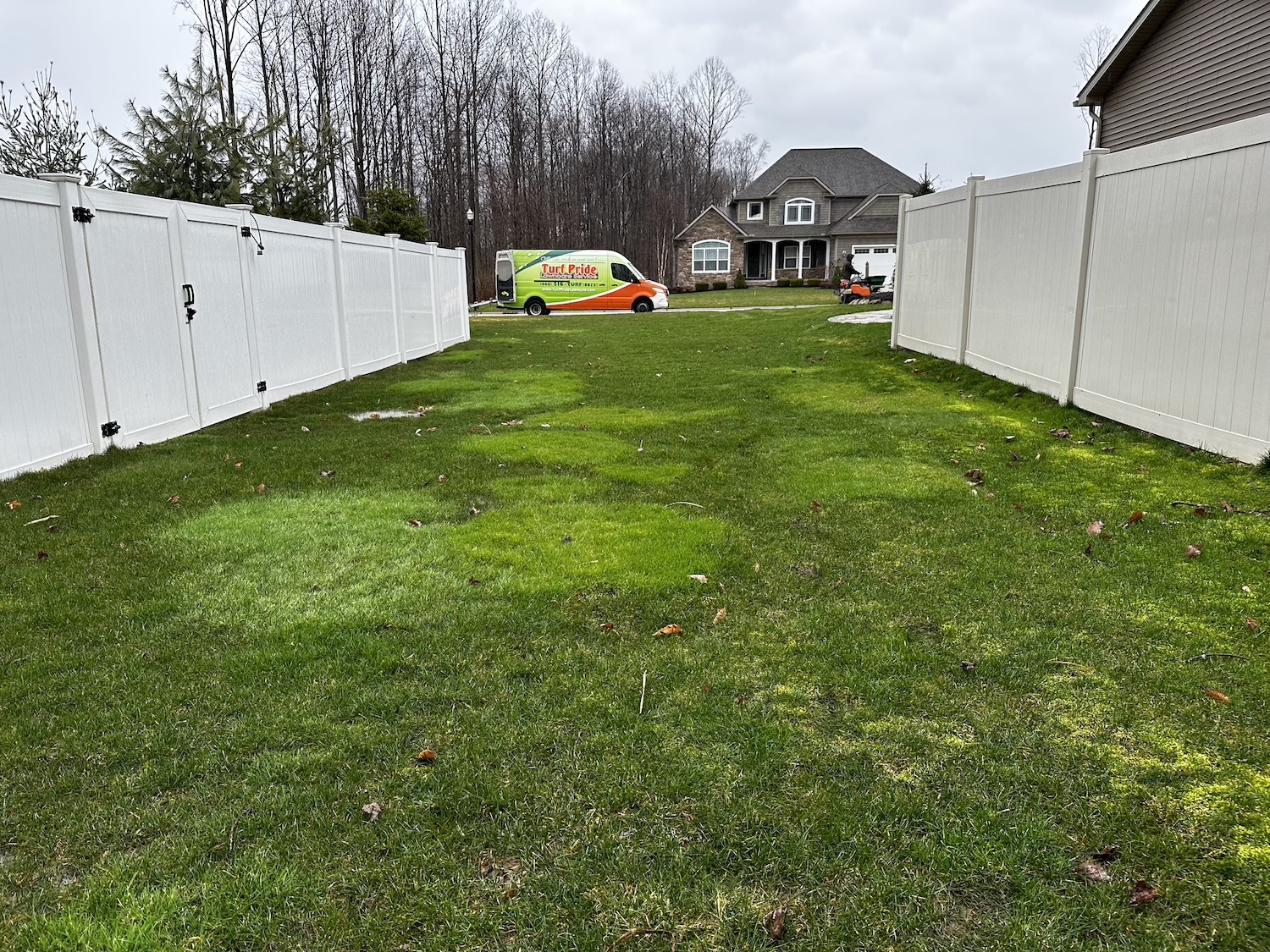
Bentgrass is light green in color, with very short grass blades and shallow roots. It begins appearing in the early spring and grows rapidly until early summer. It goes to seed in the fall and can continue to grow throughout the course of the year.
It’s easily distinguishable from other beneficial types of grass like Kentucky bluegrass or tall fescue because it does not grow very tall and is a much lighter color than those dark green grasses.
If you think you’ve seen this type of grass somewhere else before, you’re not wrong. It’s a type of grass that’s common on golf courses throughout Northeast Ohio because of how densely it grows. It has a tight growth pattern and looks very smooth to create a putting green look.
Why Bentgrass Is Hard to Control Without Help
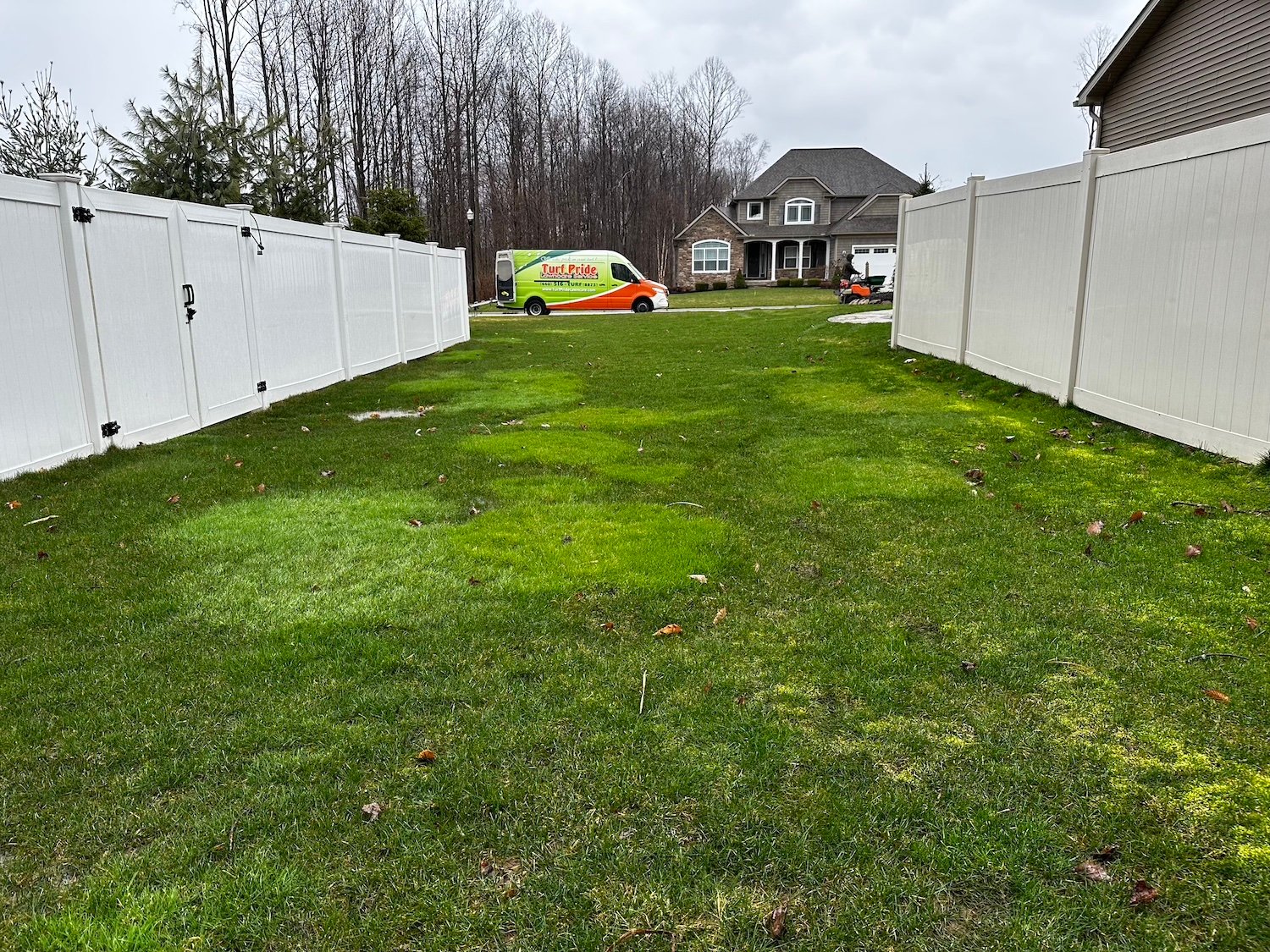
Part of the reason bentgrass is so hard to control is that it spreads very easily because it grows via stolons, which are like roots above the ground. This helps it to easily infiltrate turf that’s already thin. Once it takes hold, it can flourish into dense patches, making it extremely difficult to eliminate.
What’s more, this type of weed doesn’t take a break. Even in the wintertime, bentgrass can start producing new plants for the following season.
Rounding out the weed’s triple threat is its resistance to common herbicides that kill broadleaf weeds.
Why Bentgrass is So Problematic
So, if bentgrass is found on golf courses in the area, what’s the big deal if it is found in your lawn?
There are several reasons bentgrass is not ideal for your lawn.
1. It Requires A Lot of Water
Bentgrass needs a lot of water to stay healthy. This can become an issue during the hotter, drier months in Northeast Ohio summers.
If bentgrass doesn’t receive the moisture it needs, not only will it exhibit a lot of brown spots, but it will become stressed and weakened, opening up the door for other issues like pests and diseases.
2. It Requires Extra Inputs Like Fungicides
Because bentgrass requires a lot of extra moisture, that makes it a perfect environment for diseases, like dollar spot and red thread.
So, to keep bentgrass free of disease, we recommend using our fungicide program.
3. It Attracts Pests
In addition to providing a ripe habitat for diseases, bentgrass also attracts pests, especially grubs.
This is because bentgrass’ shallow root systems provide a buffet for the grubs, which are typically located toward the surface of the soil. Grubs can destroy bentgrass patches very easily in late summer and throughout fall.
/Live%20Website%20Images/close-up-grubs.jpg?width=1280&height=960&name=close-up-grubs.jpg)
Areas Most Susceptible to Bentgrass Invasion
Several decades ago in Northeast Ohio, lawns were intentionally planted with bentgrass, meaning that older properties may experience the most issues with bentgrass.
Additionally, bentgrass tends to take hold in lawns with sandy soil because its shallow root system means it can easily get through soil particles.
On the other hand, it’s very hard for bentgrass to pull water and nutrients from clay soil, so it doesn’t tend to do as well in those areas. Clay soils can also be very compacted, which prohibits roots from spreading easily.
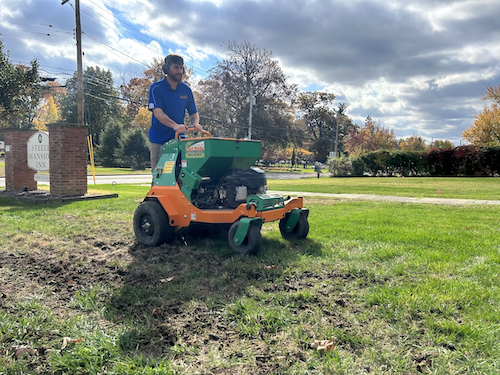
Pro Tip: If your yard is mostly bentgrass and you’d like to keep it that way, aeration is key because it helps break up the soil, allowing the roots to take in more water and nutrients.
Best Practices to Remove Bentgrass from Your Lawn
Now that you know the ins and outs of bentgrass, let’s talk about how you can get rid of it.
If you have a few patches of bentgrass in your yard, you can attempt to dig it up, but be very careful that you’re not accidentally spreading the seeds to other parts of your lawn. You also want to make sure you take out as much of the root system as possible. From there, you can replant those areas with tall fescue or Kentucky bluegrass.
Pro Tip: Be wary that do-it-yourself methods of bentgrass removal can potentially make the problem worse because any remnants left behind can reroot. Plus, you risk disturbing healthy parts of your lawn, making those areas more susceptible to bentgrass invasion, plus other weeds and pests.
/TurfPrideSpring2022(WebOptimized)-448.jpg?width=1600&height=902&name=TurfPrideSpring2022(WebOptimized)-448.jpg)
If larger portions of your lawn have become overtaken by bentgrass, for instance, two-thirds or more of your yard, more drastic measures may be required. A selective herbicide like Tenacity kills bentgrass but doesn’t affect beneficial grasses.A nonselective herbicide, which includes glyphosate, can also be used to kill bentgrass, but be aware that it will also kill any grasses around it. Rake out the dead grass so that it doesn’t have an opportunity to reseed.
Afterward, aeration and overseeding should take place.
Pro Tip: September is usually the best time to take care of overseeding and aeration.
How to Prevent Bentgrass Invasions
So, you’ve removed the bentgrass from your yard. Let’s get into how you can keep it from coming back.
As with many yard issues that can plague your Northeast Ohio lawn, preventive practices are your best bet. After all, a thick lawn naturally chokes out weeds like bentgrass.
Luckily, there are a few things you can do on your own.
Apply water to your lawn in the summertime, around 2 inches weekly during the hot summer months. Just be sure to not water it too much, as this can create a breeding ground for disease.
Set your mowing deck around 3.5 inches and mow frequently to give your desirable grasses the best chance at fending off threats.

To help you fill in the gaps, you can consider calling on a lawn care expert like Turf Pride to implement a lawn care program.
With basic packages that include weed control and fertilization, and more advanced offerings that add in aeration, overseeding, and grub control, Turf Pride’s technicians can help prepare your turfgrass to fight off bentgrass–and any other potential threat that looks its way.
Turf Pride Can Help You Take Back Your Northeast Ohio Yard
/front%20of%20home%20green%20lawn%20with%20large%20tree.jpg?width=1200&height=676&name=front%20of%20home%20green%20lawn%20with%20large%20tree.jpg)
There’s no need to get bent out of shape by the bentgrass that’s taken over your yard. If you’re located in Mentor or a surrounding area, we at Turf Pride’s can help you say goodbye to bentgrass in your yard once and for all. Call today or request a free quote online.