

What Is Nutsedge and Why Is It Growing in My Northeast OH Lawn?
If parts of your lawn seem to be growing more quickly than others or if certain sections look a little different in color or texture, it’s important to investigate further. You may have a nutsedge problem on your hands.
A common Northeast Ohio lawn weed, nutsedge in your lawn can spread quickly if left unchecked.
However, there’s no reason to let the thought of this weed taking over your yard drive you “nuts.” In this guide, we’ll explore all things related to the weed, including:
- What is Nutsedge?
- How to Identify Nutsedge in Your Lawn
- Why is Nutsedge Growing in My Lawn?
- Why Nutsedge Is So Difficult to Eliminate
- Can You Prevent Nutsedge?
- Should You Treat Nutsedge Yourself or Hire a Lawn Care Professional?
- Professional Nutsedge Control for Northeast Ohio Lawns
- FAQs About Nutsedge
- Get Help Eliminating Nutsedge Before It Spreads
What Is Nutsedge?
So, what is nutsedge, anyway?
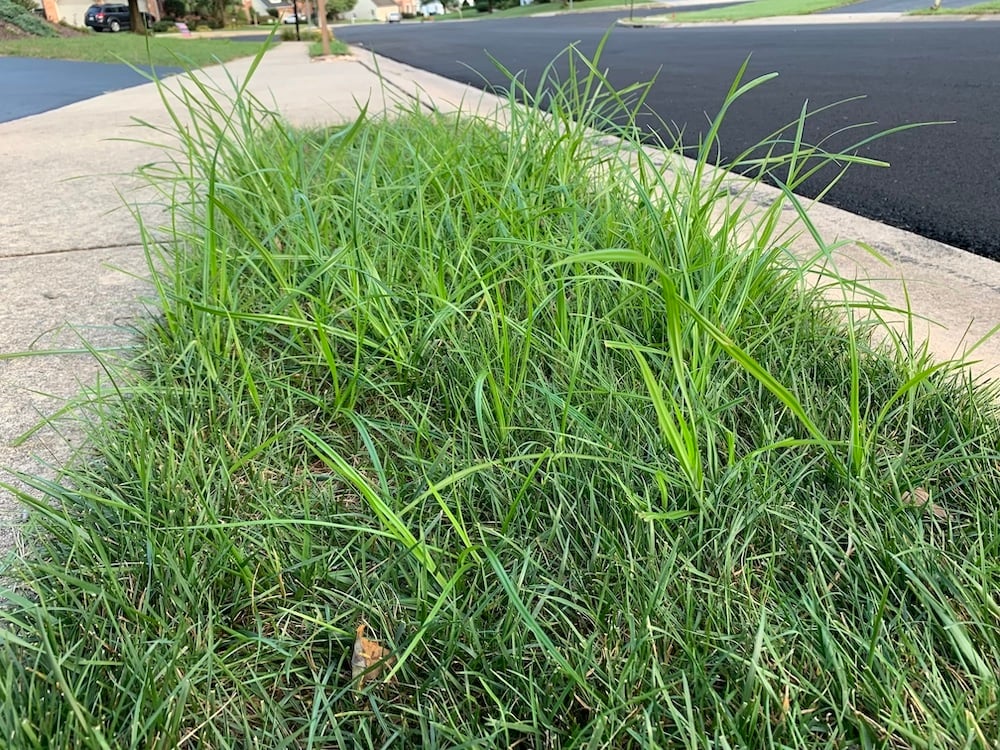
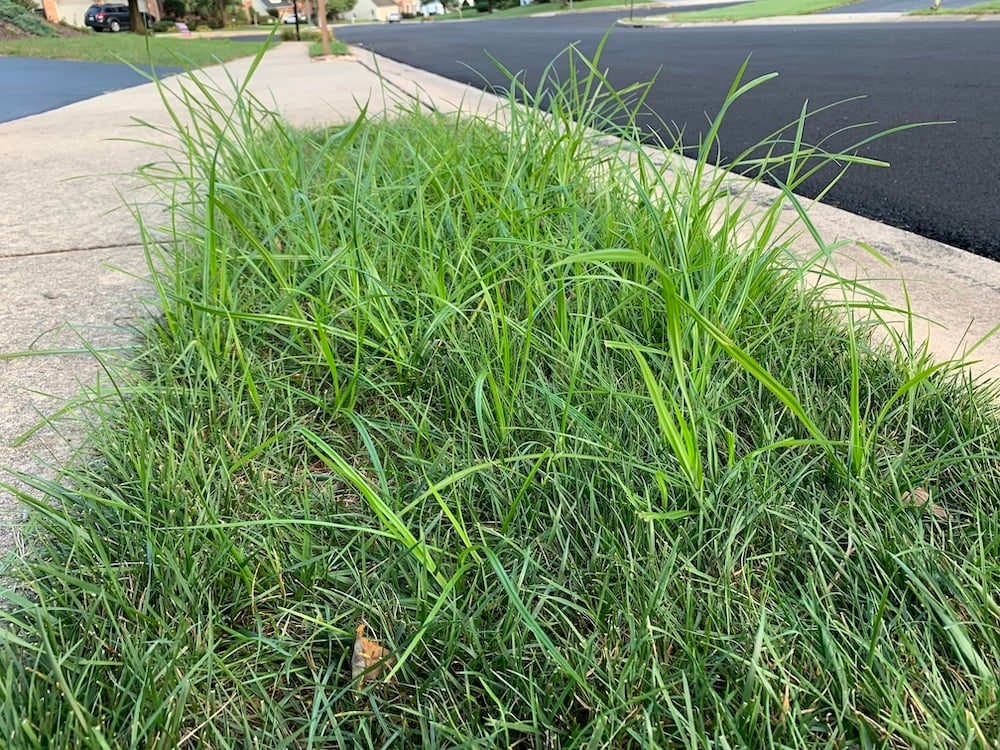
It’s very easy to mistake nutsedge for grass when in reality, it is actually a sedge. It typically grows faster and taller than the surrounding lawn and has a lighter, yellow-green color or a darker green color, depending on the type.
In Northeast Ohio, you are most likely to encounter yellow nutsedge, but you may also notice purple nutsedge.
How to Identify Nutsedge in Your Lawn
Now that you understand what nutsedge is, let’s get into how to identify nutsedge.
Yellow Nutsedge Identification
To identify yellow nutsedge, keep an eye out for:
- A bright yellow-green color
- Glossy leaves
- Fast growth relative to surrounding turf
- Triangular stems
- Seed heads clustered in the shape of an umbrella comprised of small, flat spikelets
Purple Nutsedge Identification
If you think you have purple nutsedge in your lawn, look for:
- Darker green foliage
- Purple seed heads made up of flat spikelets forming the shape of an umbrella
- Quicker growth compared to nearby grass
Just remember that this type of nutsedge is less common in Northeast Ohio. It can be helpful to confer with an expert to confirm you have purple nutsedge.
Nutsedge vs. Grass
In addition to its rapid growth, one of the easiest ways to identify it is by the stem. Nutsedge has a triangular stem, which you can often feel by rolling it between your fingers. An easy way to remember this is by the saying, "sedges have edges.”
The leaves also may feel stiffer or thicker than grass and have a distinctive color compared to turfgrass.
Why Is Nutsedge Growing in My Lawn?
You may really notice nutsedge in your lawn during periods of warm, wet summer weather because these conditions allow it to grow much faster than the surrounding turf.
Heavy rainfall, overwatering, poor drainage, irrigation issues, or consistently wet areas can create ideal conditions for it. So, it often pops up in low-lying areas, near downspouts, or next to irrigation heads or heavily watered areas.
Thin turf also creates ideal conditions by enabling space for weeds to establish. Compacted soil can contribute as well because water doesn't move through the soil as efficiently.
Because nutsedge can quickly grow several inches above the rest of the lawn, its presence becomes very obvious shortly after mowing.
In some cases, you may feel like nutsedge appeared overnight, but the truth is that it is often already present in the form of underground tubers that can easily spread.
Why Nutsedge Is So Difficult to Eliminate
Once you have nutsedge in your lawn, it can be hard to get rid of thanks to its ability to spread and return through underground tubers, called nutlets, and rhizomes, which are underground horizontal stems.
The nutlets store energy and allow new plants to develop, and if you attempt to pull up the visible plant, the nutlets can remain behind, allowing it to regrow. Even worse, repeatedly pulling or disturbing it can sometimes encourage additional growth.
Nutsedge also requires specialized products specifically labeled for sedges. The herbicides commonly used to control other Northeast Ohio lawn weeds generally aren't effective against nutsedge.
To effectively control nutsedge, the timing of the treatment matters, and multiple treatments may be necessary.
Can You Prevent Nutsedge?
While nutsedge loves moist or poorly drained soil or compacted areas, it’s not limited to only these areas. Once established, it can also show up in areas of a lawn that appear relatively normal.
That’s why it’s critical to maintain good lawn care practices and address the conditions that favor it. The good news is you may already be doing some of this for your lawn. These methods include:
- Correct drainage issues.
- Avoid excessive irrigation. Water your lawn a total of 1 to 2 inches per week over the course of two to three sessions.
- Check for leaking or poorly adjusted sprinkler heads.
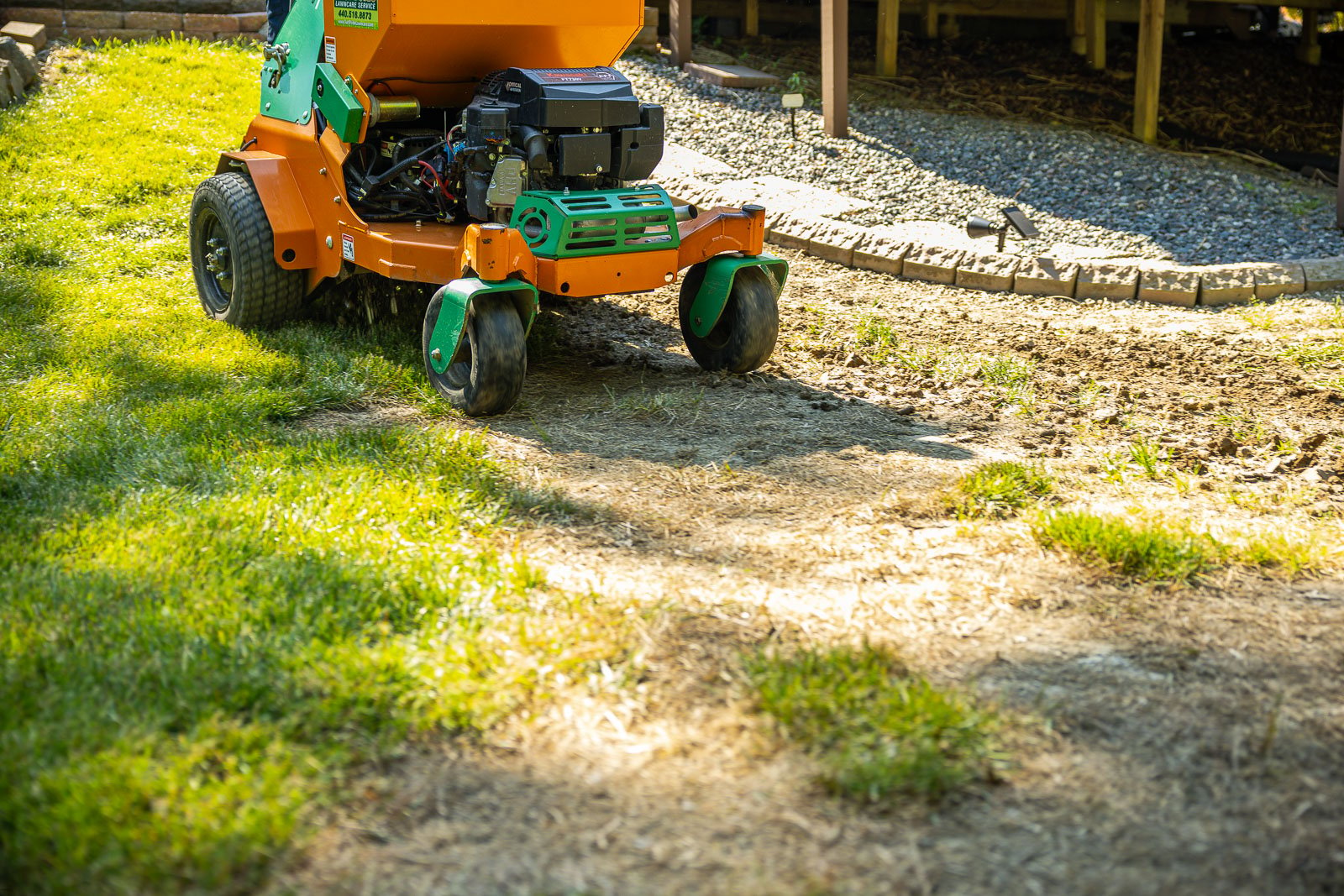
- Improve compacted soil through aeration when necessary.
- Mow your lawn to a height of around 4 inches.
- Fertilize your yard to help grass grow thick and healthy.
Doing all of these things will also help you achieve a thick, healthy lawn that can outcompete weeds.

Should You Treat Nutsedge Yourself or Hire a Lawn Care Professional?
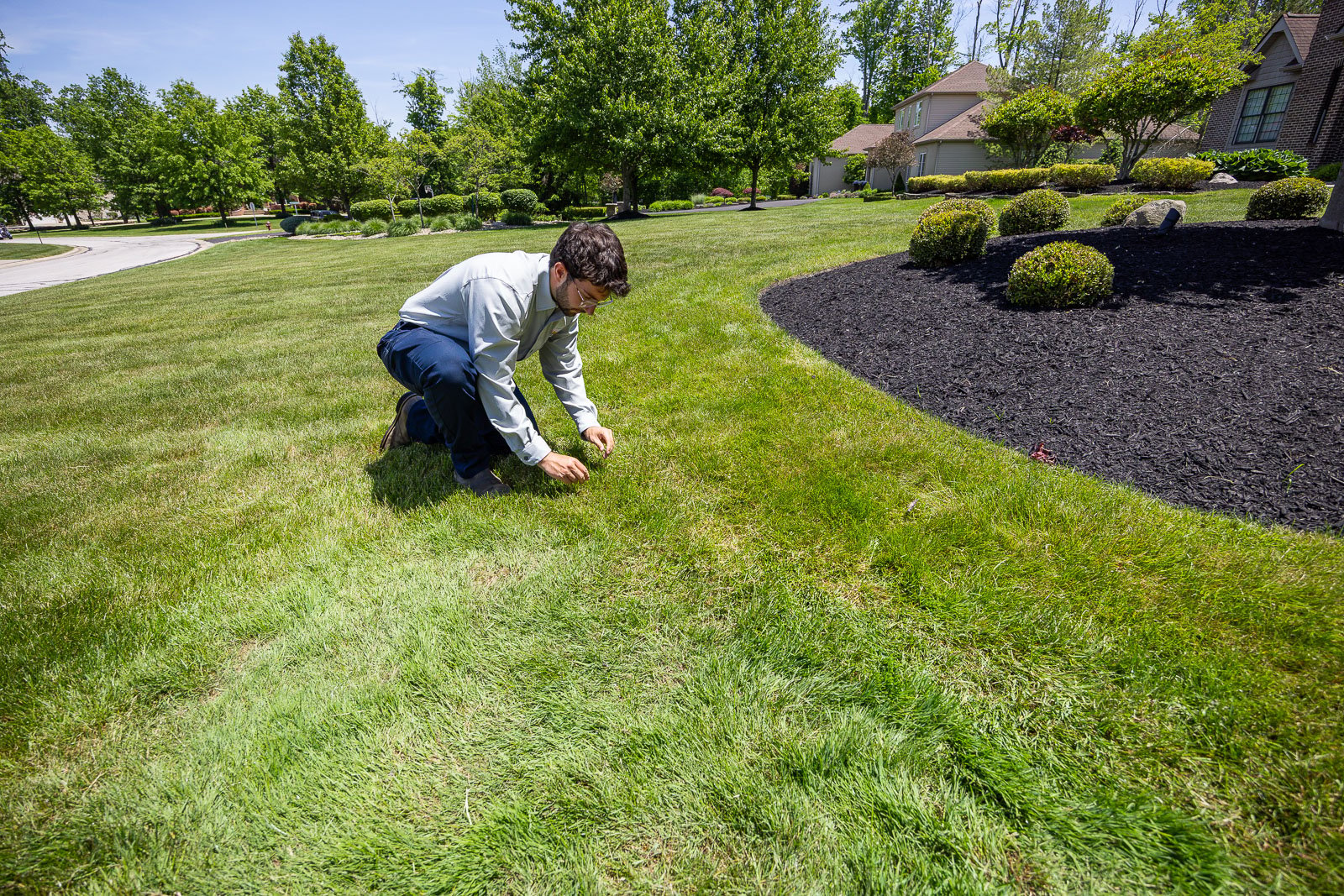
If you suspect you have nutsedge in your lawn, don't pull it as this can actually lead to it spreading.
Proper identification is the critical first step, ideally with the help of a lawn care professional.
From there, nutsedge requires a targeted treatment that includes selecting the right herbicide and timing up applications appropriately. If you select the wrong herbicide or apply it at the wrong time or rate, you run the risk of damaging the lawn or only temporarily fixing the problem.
Remember that catching it early is much easier than dealing with a large, established infestation.

Professional Nutsedge Control for Northeast Ohio Lawns
At Turf Pride, our trained and certified technicians walk your property to identify weeds like nutsedge. With years of experience caring for Northeast Ohio lawns, they know how to target the right weeds with the right treatment — and eliminate the root of the problem in the process.
Even better, weed control is built right into Turf Pride’s residential lawn care program, so your lawn can grow thick and healthy and easily fend off weeds like nutsedge.
Please note that if the nutsedge is excessive or if you as the homeowner are causing it to spread, control of it may come with a chargeable spray application.

FAQs About Nutsedge
What’s the difference between nutsedge and other weeds like crabgrass?
Crabgrass is an annual grassy weed, while nutsedge is a perennial sedge with an underground reproductive system. As such, the treatment method for each is different.
Can I just pull out nutsedge on my own?
No. Avoid pulling out nutsedge by hand. Because of the underground nutlets, removing what you see above ground doesn't necessarily eliminate the plant. In fact, attempting to get rid of it this way may cause it to spread even further.
If I see nutsedge in my lawn, does that mean my lawn care program isn’t working?
No, your lawn care program is likely working well. Standard lawn weed-control applications are primarily designed for common broadleaf weeds like crabgrass. Nutsedge typically requires a different, targeted treatment.
What conditions contribute to nutsedge taking over my lawn?
Wet conditions, compacted soil, and thinning turf all provide opportunities for nutsedge to creep in.
What can I do to avoid getting nutsedge in my lawn in the first place?
Avoid overwatering. Provide your lawn with the nutrition it needs through fertilization. Set the cutting deck of your mower to a height of around 4 inches. And, if you notice you have compacted soil, poorly draining sections, or thinning turf, aeration and overseeding may be the key to a healthier lawn.
Can I get rid of nutsedge in one season?
Think of nutsedge control as management rather than an instant cure, particularly with an established infestation.
A properly timed nutsedge treatment can provide very good control of the actively growing plants, but underground nutlets may remain and produce additional growth. That means follow-up treatments may be necessary, and established nutsedge can sometimes take multiple seasons to bring under control.
Get Help Eliminating Nutsedge Before It Spreads
Don’t let lawn problems like nutsedge run wild throughout your yard. Take back your turf with proactive lawn care and early treatment designed to stop nutsedge in its tracks before it spreads.
Contact Turf Pride today or schedule a free lawn evaluation to keep your Northeast Ohio lawn weed free.