
How to Protect Trees and Shrubs In Northeast OH from Winter Salt Damage
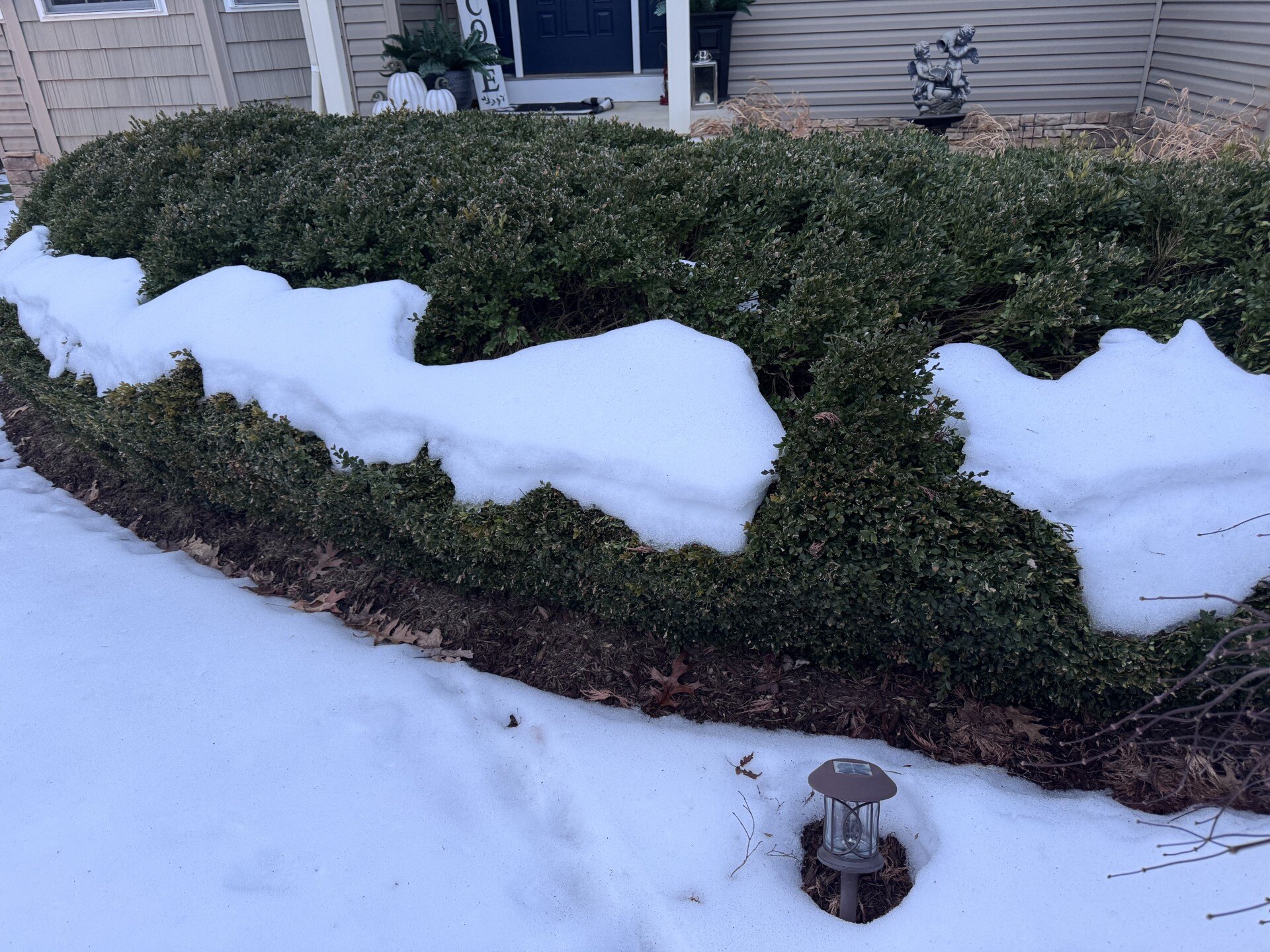
Have you noticed that your trees and shrubs, especially those located near driveways or roads, tend to sustain damage year after year? Are they discolored? Do they have a hard time growing?
Sure, Northeast Ohio winters can bring harsh elements like wind, cold, and snow, but there’s another factor you need to consider: the impact of salt on trees and shrubs.
Check out our guide to learn how you can protect your trees and shrubs from salt, so they can weather the winter and be ready to thrive come spring.
Winter Salt Damage to Trees and Shrubs
With the amount of snow and ice that falls during Northeast Ohio winters, salt on roadways and driveways is inevitable.
So, why is salt so damaging to trees and shrubs anyway?
Road salt can damage trees and shrubs in two ways: through airborne sprays and soil absorption.
Airborne Spays
Your trees and shrubs can sustain this type of damage due to salty water from the road or your driveway splashing onto the plant.
Soil Absorption
Salt damage through soil absorption, on the other hand, happens when salt that’s present in melted snow or runoff water gets into the soil.
Signs of Salt Damage
Over time, road salt can lead to dehydration and nutrient imbalance, and if left unchecked, it can cause major damage to your trees and shrubs.
Let’s take a look at some of the signs to look out for to determine whether your trees and shrubs are suffering from salt damage.
Discoloration
For evergreen trees, salt damage typically manifests as yellowing or browning needles. This often starts at the tips of the needles. You may notice it first with older needles, or you may see a significant amount of needles that have dropped from the tree.
Salt damage on deciduous trees and shrubs can look like scorched leaf tips. Damage on deciduous trees is less likely though once all the leaves have dropped for the winter.
Dieback
Starting at the tips of your tree or shrub and making its way downward, dieback is the gradual death of shoots and branches.
Stunted Growth
Keep an eye on how much your tree grows each year. If you suspect that your tree or shrub exhibits very slow or no growth, it may be a symptom of salt damage.
As the seasons progress into spring and summer, you may also notice that your deciduous trees and shrubs feature small leaves, weaker buds than usual, or new tufted growth sprouting from its base. In the fall, the leaves may drop earlier than normal.
Plant Death
In the most severe cases, salt damage can result in your trees and shrubs dying. If the salt content in the soil is excessive, we recommend avoiding planting new shrubs in the same location.
Trees Most Susceptible to Salt Damage
If you’re wondering what types of trees are most susceptible to salt damage, you’re not alone.
/looking%20at%20tree%20with%20technician%20and%20customer.jpg?width=1600&height=902&name=looking%20at%20tree%20with%20technician%20and%20customer.jpg)
Here’s a list of trees that you should pay special attention to for signs of salt damage:
- Eastern white pines
- Birch trees
- Maple trees
- Ash trees
- ArborvitaeArborvitae
- Junipers
- Hollies
- Boxwoods
- Flowering ornamentals
However, determining what type of trees and shrubs you have in your lawn is not the only way to identify what plants are most at risk.
You should also keep a close eye on where your trees and shrubs are located.
Trees and shrubs located close to the road are often the most likely to suffer salt damage because these areas are where the salt is spread the most.
Plants near driveways and walkways can also become damaged if salt is used on these surfaces. Note that salt can also be tracked onto these types of surfaces by people or vehicles.
Keep in mind that trees also growing in and around drainage ditches are also at risk, as the salty water that’s run off from the road can collect in these areas and seep into the soil.
How to Prevent Winter Salt Damage
Luckily, there are a few ways you can prevent your trees and shrubs from succumbing to salt damage.
Placement
Before planting trees or shrubs in your yard, spend a little extra time thinking about where you plan to put them.
If you can, try not to plant them near roadways, your driveway, or other concrete areas like walkways that typically have salt applied to them in the winter.
Pro Tip: If you do have a landscape bed with vulnerable trees and shrubs near a driveway or walkway, consider adding at least 2-3 inches of mulch, which can trap some of the snow melt containing salt and prevent it from leaking into the soil.
Proper Watering
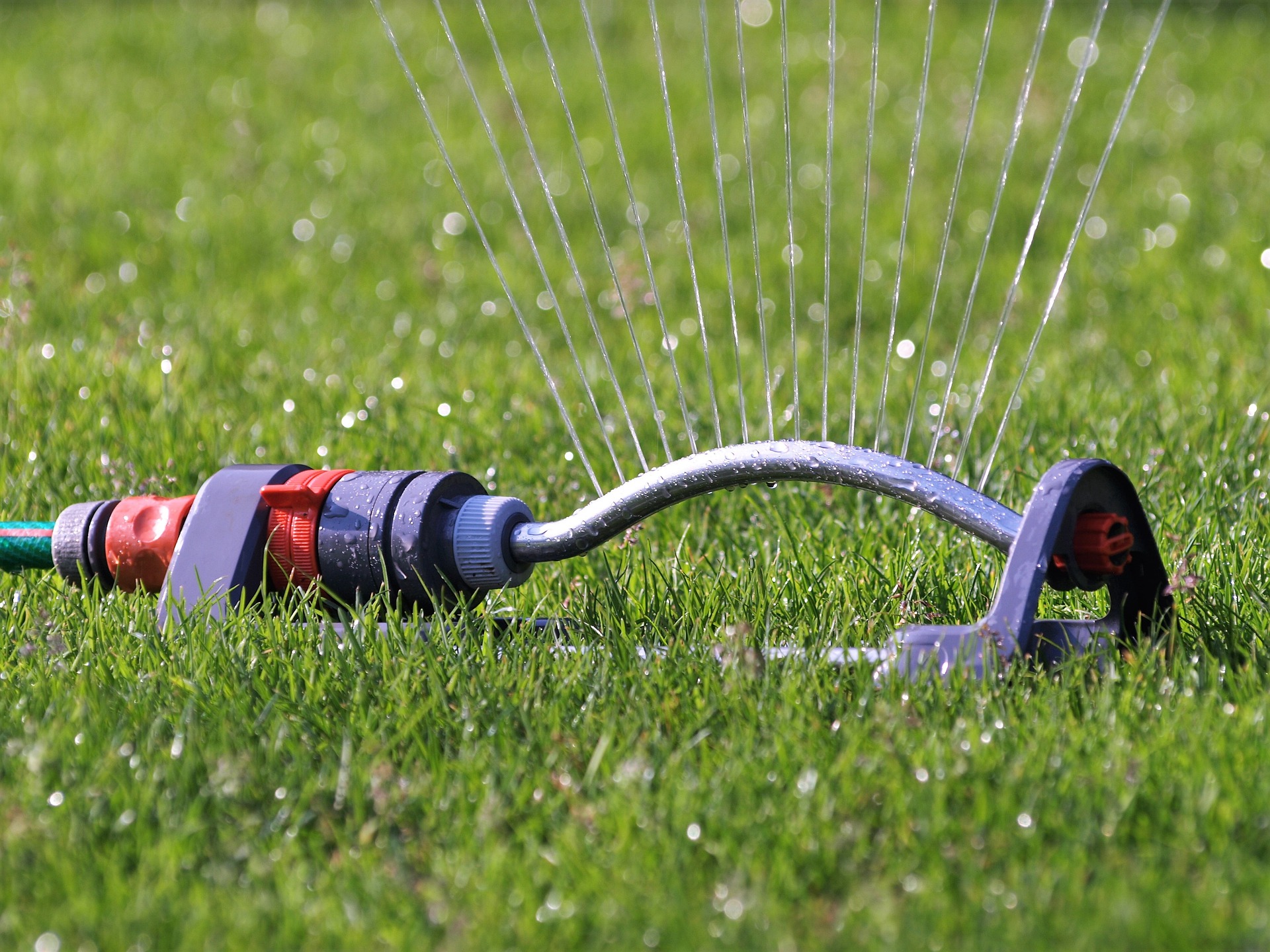
While you’ve likely already turned off your sprinkler system to prevent your pipes from freezing, it’s still not a bad idea to water your trees and shrubs, especially those near roadways and driveways, before we experience freezing temperatures in the area. That way, the plants have enough liquid water available to help them stave off dehydration.
Physical Barriers
Burlap screens or snow fences can shield your trees or shrubs from salt spray that comes off of the road. This method may be most effective for small or younger varieties.
How to Help Trees and Shrubs Recover From Damage
There are a few ways to help your trees and shrubs bounce back from salt damage.
However, note that if more than 50 percent of your tree or shrub has been damaged, it may be time for removal or replacement.
Pruning
You can prune your trees and shrubs during their dormant time in the winter or in the summer, which can help thin them out and allow more air to flow through the plant.
However, be wary that spring is not the best time for pruning. This is because you don’t want to disturb the process of buds opening up or new growth. This can also reduce the blossoms on flowering plants, such as hydrangeas.
If you notice discoloration or broken twigs, you can either let it grow out on its own or remove the dead or broken part once the new growth in spring has fully emerged, for example, in June.
You should also be careful not to remove huge portions of the plant at one time, as this can contribute to a lot of plant stress, opening the door for other factors like insects or disease to take advantage of the weakened plant. Spider mites on burning bushes is a good example of this activity.
Fertilization
Fertilizing in the spring is another way to help your trees and shrubs recover from salt damage.
It’s perhaps the best way to provide nutrients to the plants, so they can push out new buds and remain healthy and resilient all season long.
At Turf Pride, our plant health care program includes two fertilizer treatments for trees and shrubs: one in the spring and one in the fall.
/Live%20Website%20Images/dormant-oil-technician-spraying.jpg?width=1600&height=902&name=dormant-oil-technician-spraying.jpg)
Professional Care to Prevent Winter Salt Damage to Trees and Shrubs
While doing things like pruning may seem simple enough, there are in fact a lot of ways to accidentally cause irreparable damage to your trees and shrubs.
It’s important to nail the timing and technique, which is why proper professional pruning is one of the best ways to keep your plants at full strength.
Professional plant health care specialists like Turf Pride’s know the tree and shrub species that grow in Northeast Ohio and understand which branches to take off, the best types of cuts to make, and how much of the tree should be trimmed.
Kick Salt Damage to The Curb With Turf Pride
When winter comes barreling into Northeast Ohio, will you be ready to protect your trees and shrubs from salt damage?
To best fortify your trees against winter, call in a plant health care provider that’s worth their salt.
/office%20staff%20on%20phone%20with%20customer.jpg?width=1200&height=676&name=office%20staff%20on%20phone%20with%20customer.jpg)
If you’re located in Mentor or a surrounding Northeast Ohio suburb, give us a call or get a free quote today.